

Ten Mental Gremlins That Sabotage Your Progress—And How to Combat Them. Part 2
Improving healthspan means making some changes. Change is hard. Here are three more science-backed tips to help keep you on the straight and narrow.

You may be surprised to learn that although the brain makes up only around 2% of your body weight, it burns roughly 20% of your resting energy.
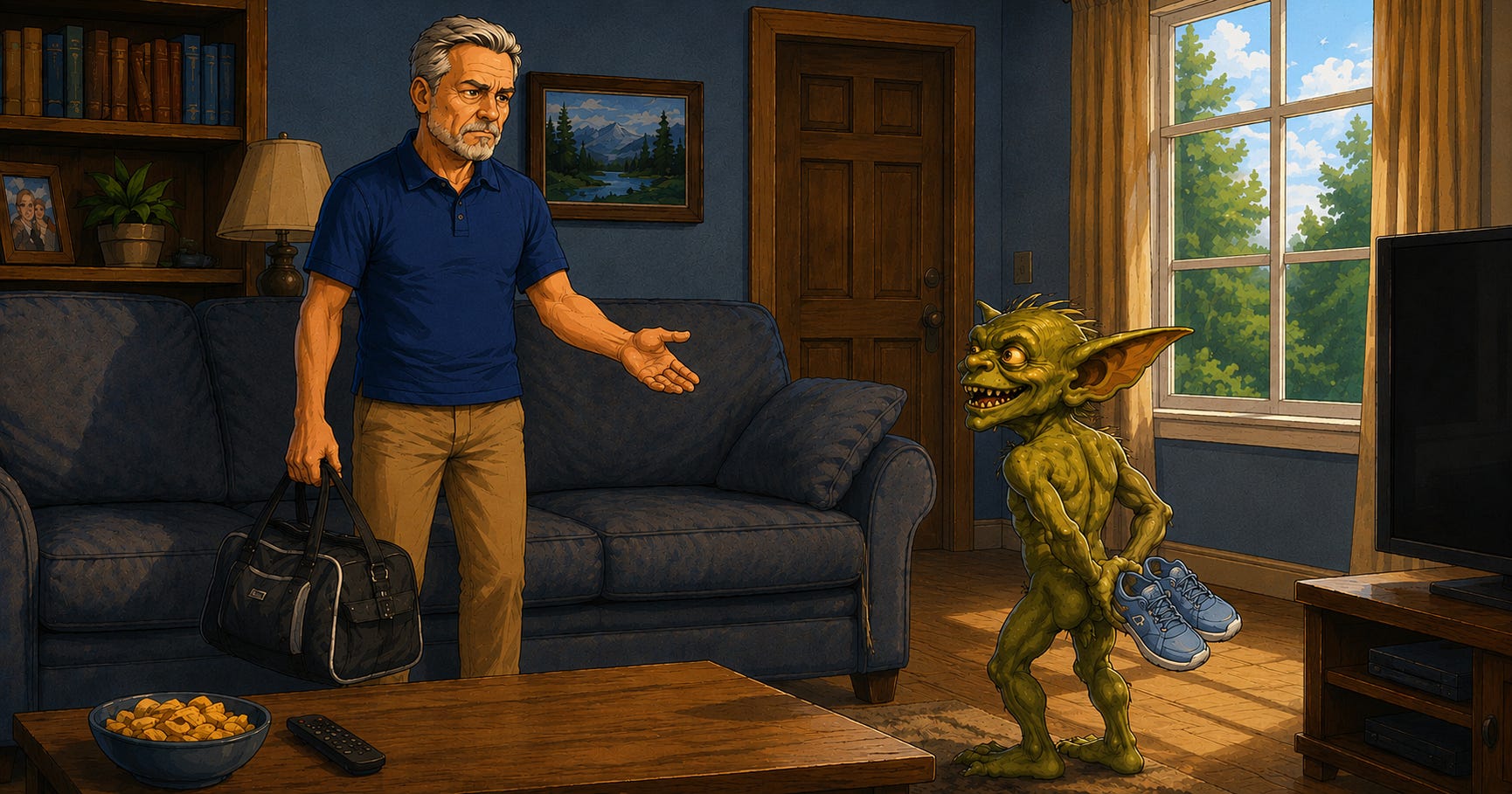
It’s metabolically expensive because it never really switches off. Even when you’re sitting quietly with a cup of tea wondering where you left your glasses, your brain is busy maintaining nerve signals, regulating breathing, heart rate and temperature, processing information and, at times, unleashing your favourite mental gremlins at the worst possible moment.
The uncomfortable truth is that we’re not especially rational creatures. We like to think we’re calmly logical beings making sensible decisions in our own best interests, but much of the time we’re closer to a slightly feral chimp with access to online shopping and too much sugar.
Our software is still buggy. The gremlins are proof of that.
In the first part of the series, we looked at:
1. All-or-nothing thinking
You miss one session and your brain decides the entire week is ruined.
2. Catastrophising
The brain takes a small setback and cranks it up into an apocalyptic event.
3. Present bias
We humans are wired to prefer immediate reward over future benefit.
Unfortunately, we have another mental drawer full of these critters. See if you recognise any of these…
4. Confirmation bias
Once people form an identity story, the brain starts gathering evidence to support it.
“I’m lazy.”“I’m not sporty.”“I’ve never been disciplined.”
Then every wobble becomes ‘proof.’
Meanwhile all the contrary evidence gets ignored.
What this sounds like
“I told you. That’s just who I am.”
“I’ve always struggled with exercise.”
“People like me don’t stick to routines.”
How to disrupt it
Start collecting evidence for the defence.
Make a note of:
workouts completed
walks taken
days you showed up despite low motivation
small improvements
In the mental courtroom, the gremlins can’t argue quite as confidently when there’s a growing pile of evidence against their favourite story—especially when it’s pinned on the fridge door.
5. The “what’s the point?” effect
People see elite athletes, buff influencers or relentlessly positive fitness people on social media and conclude:
“Well I’ll never look like that.”
So they don’t bother trying.
Which is like refusing to save money because you’ll never be a millionaire.
What this sounds like
“It won’t make much difference.”
“I’m too old now.”
“The damage is already done.”
How to disrupt it
Shrink the goal.
Healthspan isn’t about becoming superhuman.
It’s about becoming slightly more capable than you were before.
Can you:
walk a bit further than last time?
get up from the floor easier?
recover faster?
carry shopping without sounding like a wheezy accordion?
They all count.
Unspectacular improvement in your ‘functional fitness’ should be recognised and applauded. Credit where it’s due.
6. Identity locking
People often treat habits and behaviour like permanent identity.
“I’m not a gym person.”“I don’t exercise.”“I’ve never been fit.”
As though this was genetically assigned at birth like eye colour.
What this sounds like
“That’s not really me.”
“I’m hopeless with routines.”
“I was always the one picked last in P.E.”
How to disrupt it
Stop ‘trying to get a fit.’
Aim to become ‘an active person.’
Identity changes through repeated behaviour, not scrolling through your social media feed.
Every walk, workout or healthy meal becomes a vote for the type of person you’re becoming.
This quotation, often attributed to psychoanalyst, Carl Jung is spot on:
“You are what you do, not what you say you’ll do.”
Next time…
In the final part, we’ll tackle the last four little gremlins who love nothing more than sabotaging your progress, messing with your head and replacing all your good intentions with chaos, excuses and general mischief.
Cheers 👋
Stuart
Medical Disclaimer: This article is for general information only and does not constitute medical advice. The needs of every reader are unique; please consult your GP or a qualified healthcare professional before making changes to your diet, exercise routine, or medication. Never ignore professional medical advice because of something you read online.
I notice #6 often feeding into the other points when trying to get patients to change behavior patterns, whether its smoking, sleep, exercise or nutrition.