

Find Out How Well Your Upper Body is Ageing With This Simple Test
The Knee Press-up is a perfect starting point for assessing your upper-body capability, a vital component for leading a long and independent life.

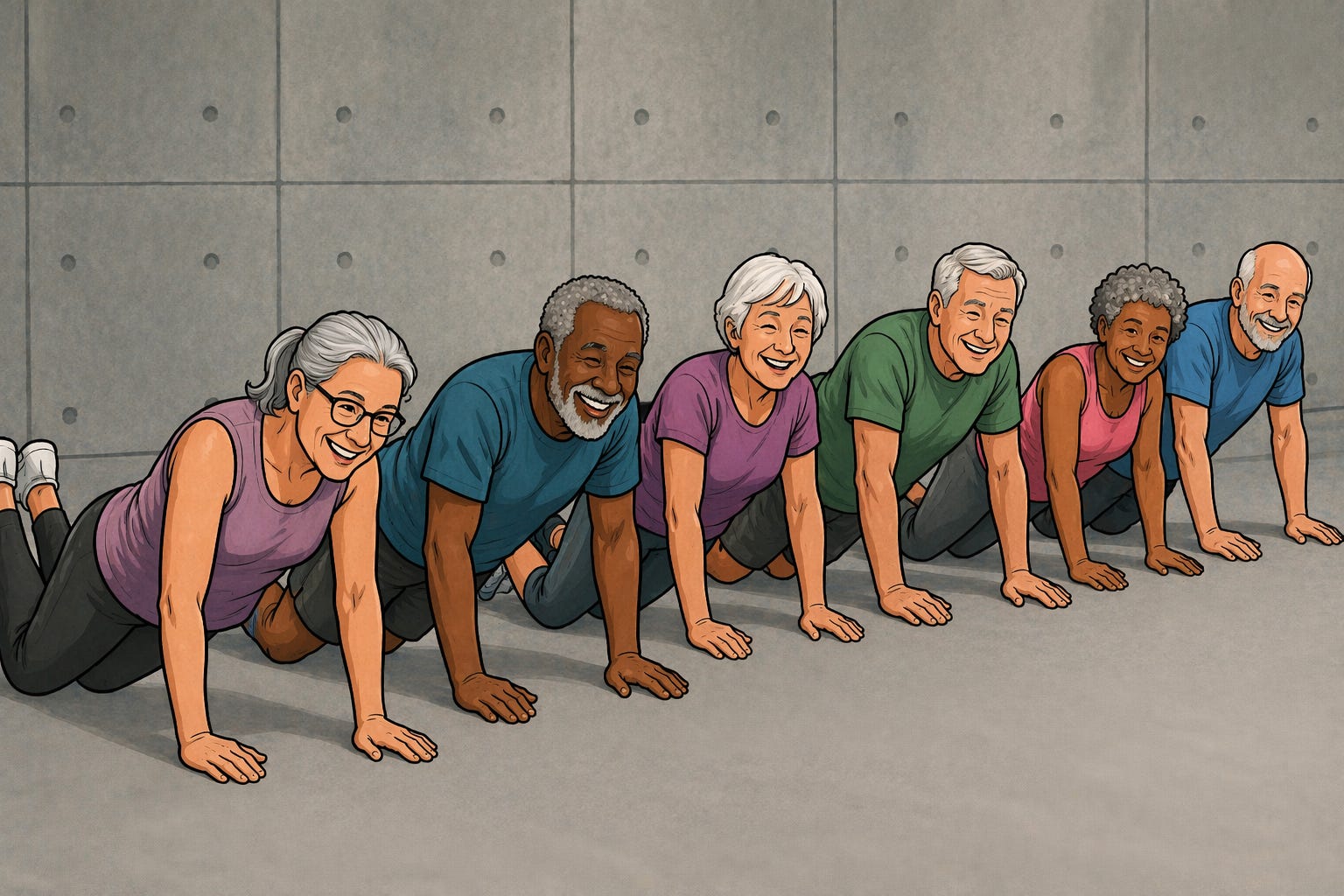
If the mere mention of a press-up makes you shudder, you likely have a sadistic PE teacher to thank. For years, it was dished out as punishment, not recognised for what it actually is: a very useful movement pattern.
But in the world of modern healthspan science, the press-up has undergone a serious rebrand. It’s no longer a tool for getting revenge on wayward pupils; it’s one of the most reliable predictors of how well you will age.
Whether you call them push-ups or press-ups, this simple movement is a vital barometer of your upper-body capability.
If a full press-up feels out of reach, the Modified (Knee) Press-Up is your perfect entry point. Don’t mistake this as a “soft option.” It’s a useful way to measure the integration of upper-body strength, muscular endurance, and core stability, with no special kit required.
What this test measures
Muscular Endurance: Specifically in your pectorals (chest), deltoids (shoulders), and triceps. By dropping to your knees, you’re still moving 54% to 60% of your total body weight.
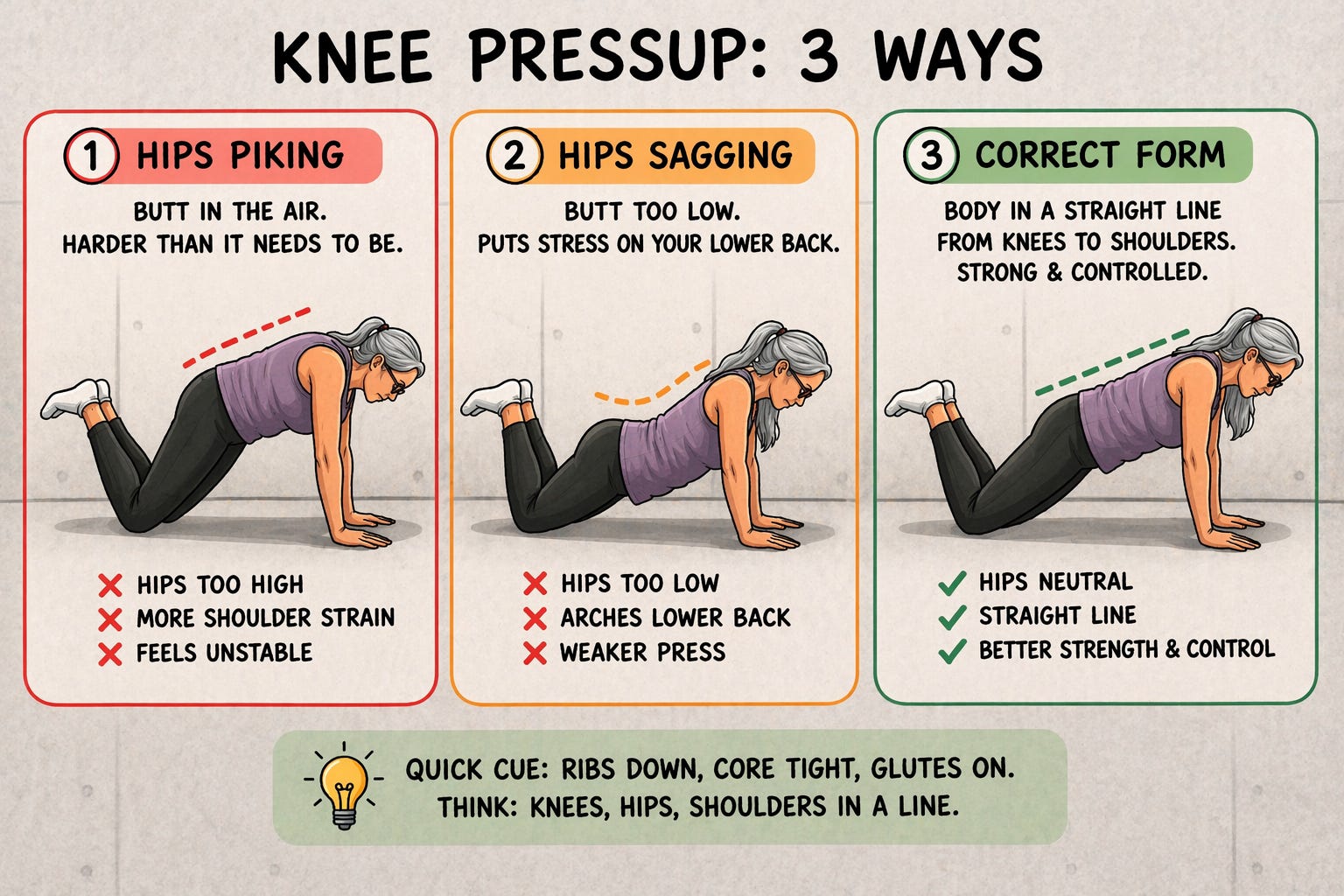
Core Capability: To do this correctly, your “posterior chain” and core must work as a single, cohesive unit. If your hips “pike” (sticking up) or “dive” (sagging toward the floor), it’s a sign your core needs as much work as your arms and chest.
Why it matters
Starting in our 30s, we begin to lose lean muscle mass at a rate of roughly 3% to 8% per decade. This decline, known as sarcopenia, accelerates sharply after 50.
This isn’t just about how you look; it impacts your metabolic rate, your bone density, and your ability to perform daily “push” tasks—from opening a heavy door to the most critical movement of all: pushing yourself up off the floor after a fall.
How to do the test
Find a quiet space and use an exercise mat or a thin cushion to protect your knees.
The Set-up: Start in a knee plank position with hands directly under your shoulders. Your body should form a straight line from head to knees, with your lower legs bent at 90 degrees.
The Descent: Lower your chest until it’s roughly a fist’s width from the floor. Keep your elbows tucked in at a 45-degree angle (avoid “flaring” them out like a T-shape, which stresses the shoulders).
The Drive: Push back up to the start position, keeping your midsection braced.
The Limit: Repeat until you can’t maintain perfect form. If your hips sag or you can’t lock out your arms, the test is over.
Safety Note: If you feel pain in your back, shoulders, or elbows, stop immediately. We’re testing capability, not first aid skills.
Making sense of your score
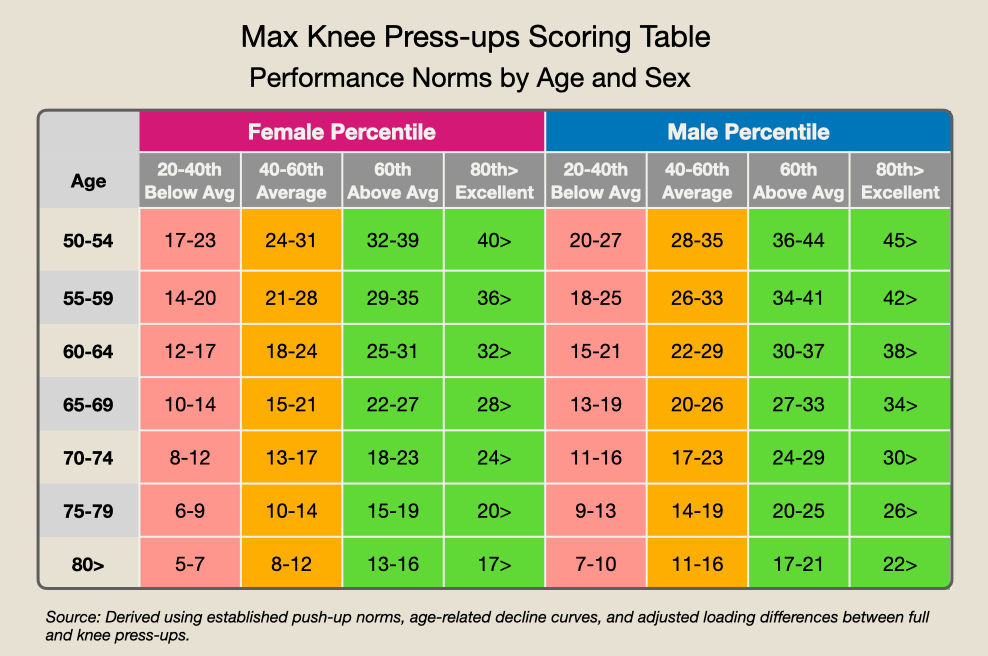
Once you have your number, compare it to the research data for your age and sex below. If you score above the “Average” for your bracket, look at the age group below yours and see what the average score for that age group is—you might find you’re “functionally” younger than your birth certificate suggests. 💪
How to ace your next test
The beauty of muscle is that it’s remarkably “trainable”—it wants to adapt. To improve your score, don’t wait for a “hero effort” once a month. Instead, use the “Grease the Groove” principle: consistency over intensity.
Research shows you are 2 to 3x more likely to stick to a goal if you link it to a specific time and place. Try creating an “Implementation Intention” statement like this one:
“For the next 8 weeks, every Tuesday and Thursday at 11:00 AM, I will do two sets of knee press-ups and attempt to beat my previous best by just one repetition.”
Tell a friend or find an “accountability partner” to keep you on the straight and narrow (or at least to point and laugh when you consider skipping a session).
If you need a bigger carrot, promise yourself a nice treat—make sure it’s not one that will undo all your good work though!
The bottom line
This test is a snapshot of your current upper-body “functional capacity.” Measure it every couple of months. Combined with a 30-Second Sit-to-Stand test, you’ll have a comprehensive profile of your physical independence for the decades to come.
How did you get on? Let us know your scores in the comments.
Medical Disclaimer: This article is for general information only and does not constitute medical advice. The needs of every reader are unique; please consult your GP or a qualified healthcare professional before making changes to your diet, exercise routine, or medication. Never ignore professional medical advice because of something you read online.