

Grip Happens: What the Dead Hang Test Reveals About Your Healthspan
Before jars get harder, bags feel heavier and handrails become suspiciously essential, there’s one brutally simple way to check whether you’re losing your grip.
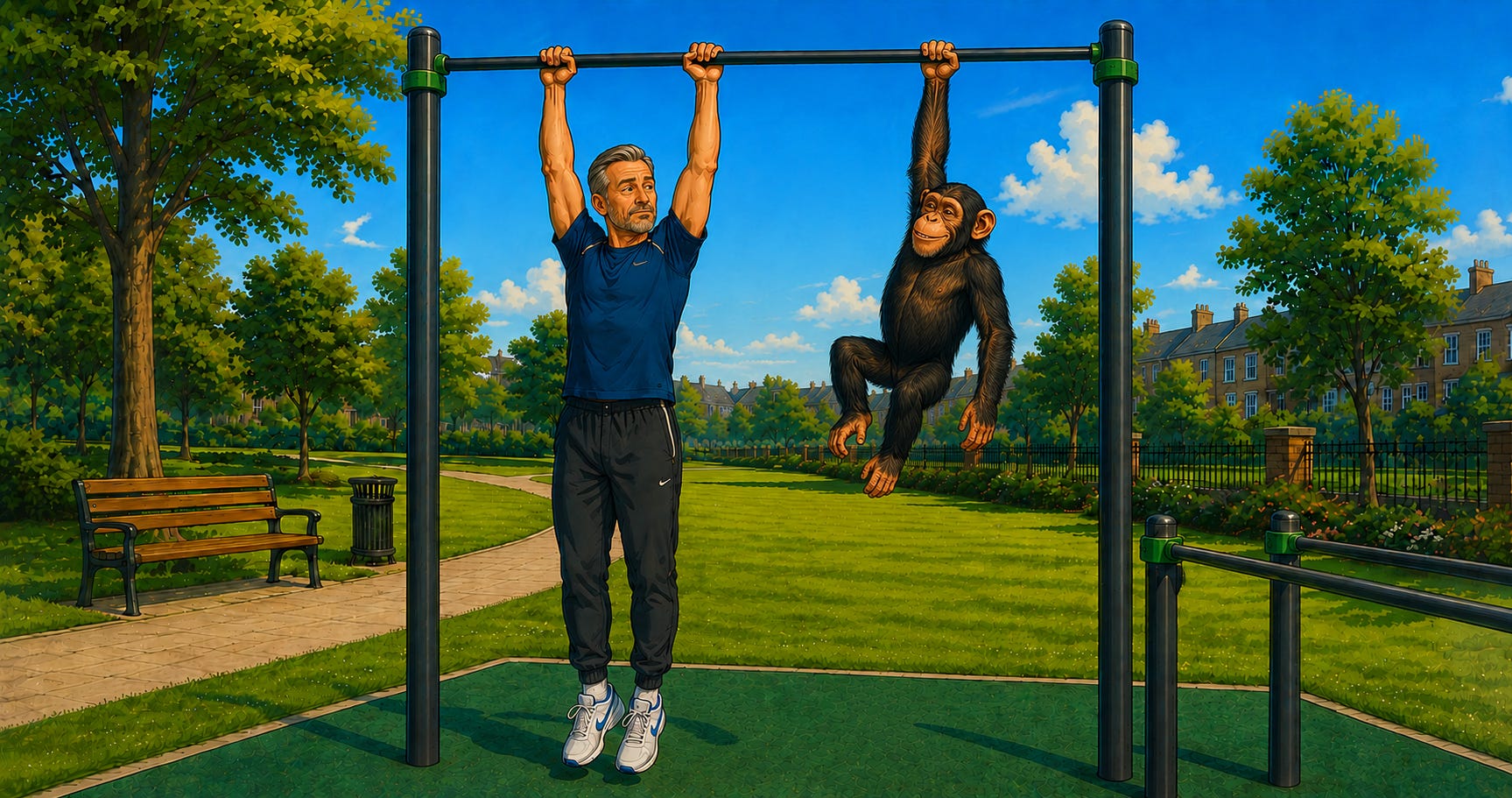
Currently the darling of longevity influencers and fitness experts worldwide, this test is often cited as one of the strongest predictors of longevity as we age.
In the past, this simple test tended to show up in various sadistic PE lessons, or as the military-recruitment equivalent of auditioning for The X Factor. But it can reveal a surprising amount about your current healthspan, and it’s a great starting point for building upper-body strength. Best of all, it only takes a couple of minutes of hanging around.
Let’s get into the details.
What this test measures
The dead hang test measures how long you can support your own bodyweight while hanging from a bar. Most obviously, it tests grip strength and endurance: can your hands and forearms keep you up there when gravity has other ideas?
That makes it slightly different from a standard grip-strength test, where you squeeze a dynamometer as hard as possible for a few seconds. A dynamometer measures maximum grip force; a dead hang measures whether you can sustain your grip under load. Complementary, but not the same.
It also tests relative strength, which matters because the bar doesn’t care who you are. It only cares how much of you is hanging from it. A lighter person with modest grip strength may do well, while a heavier person with similar grip strength may find the whole thing a bit unforgiving. Nuance matters, which is always annoying when you were hoping for bragging rights.
Finally, the test calls for a reasonable level of shoulder stability and core endurance. Not in any diagnostic sense, but in terms of how comfortably you can hold an overhead position under load. Hanging is not just a hand exercise. Your shoulders, core and grip all have a part to play in keeping the show on the road.
Why it matters
The science behind the dead hang isn’t as well developed as the science behind handgrip dynamometer testing.
So why bother?
Because the dead hang is simple, cheap and practical. It’s a home test. It gives you a number. And, done sensibly, it can be improved with practice. For those of us interested in healthspan rather than just lifespan, that’s what matters.
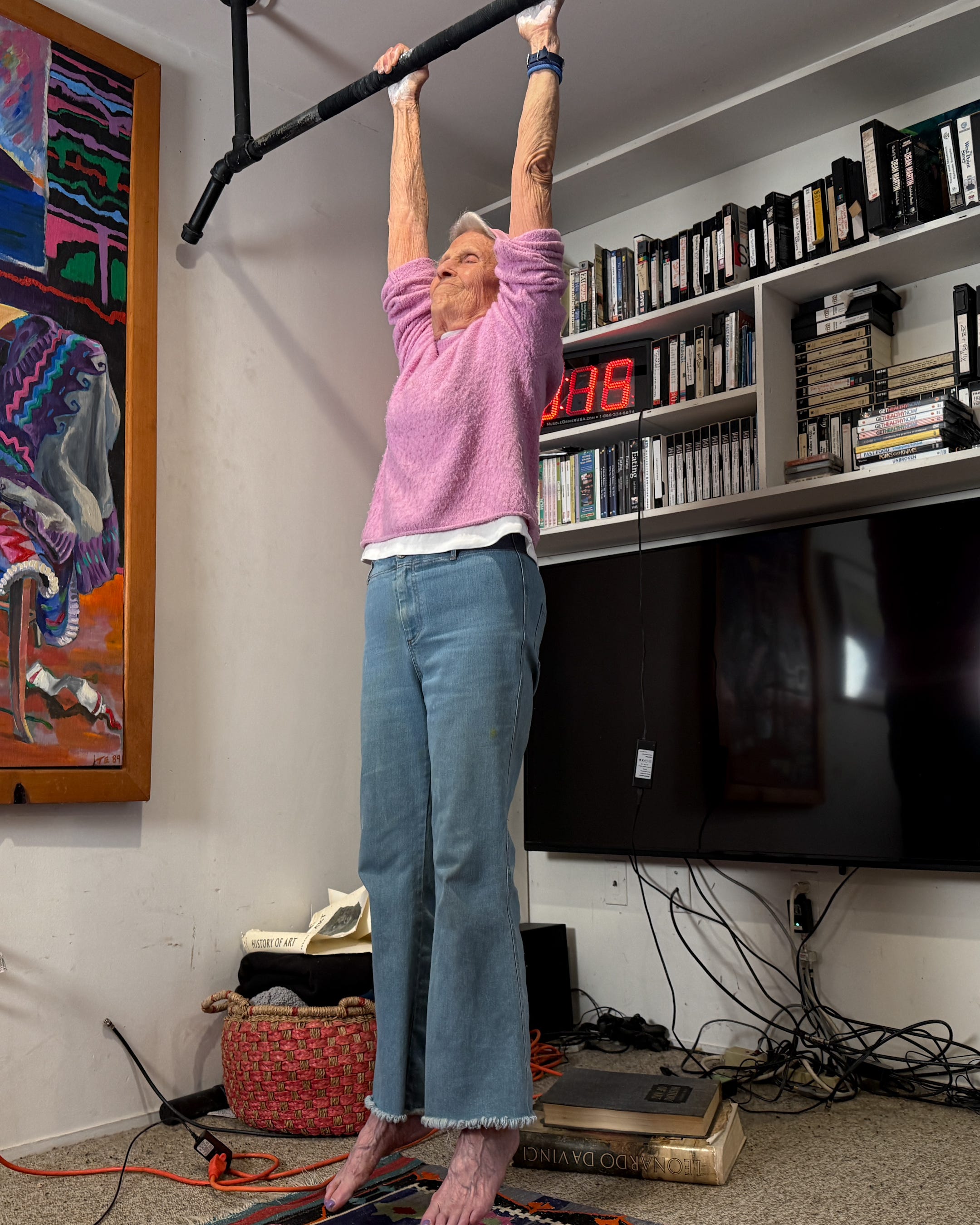
The point isn’t to become a calisthenics influencer, like Ann Esselstyn. It’s to keep enough useful strength in the bank that ordinary life doesn’t become more limiting than it needs to be. Carrying shopping, lifting bags, opening jars, using tools, holding handrails, getting up from the floor — none of these things is glamorous, but they all belong in the toolbox of independence.
Large studies have linked weaker grip strength with higher risks of disability, disease and mortality in later life. One major international study even found grip strength to be a stronger predictor of all-cause and cardiovascular mortality than systolic blood pressure. That doesn’t mean your grip replaces your blood pressure reading, obviously. It means grip strength is a useful signal. If your grip is declining, it may be telling you something broader about your muscle, ageing and resilience.
How to do the test
Use a solid pull-up bar, high enough that you can hang with your feet clear of the floor, but ideally reachable from a box, step or bench. You may find one at your gym, in the local park, or at home. Be careful with doorway pull-up bars, especially the removable kind. They need to be fitted properly, checked regularly and treated with a degree of suspicion. Gravity isn’t known for its forgiving nature.
Before you start, do a short warm-up. Shoulder circles, arm circles and wrist circles are enough for most people. You might also do one or two brief supported hangs, keeping your feet lightly on the floor or a box, just to let your shoulders and grip know what’s coming.
Use an overhand grip, with your palms facing away from you. Place your hands roughly shoulder-width apart. Wrap your thumbs around the bar unless you have a very specific reason not to.
Don’t jump up to the bar, especially if you’re new to this. Step up, take hold, then gently transfer your weight.
For the test itself, start the timer when your full bodyweight is hanging from the bar. Keep your arms straight, without locking your elbows. Keep your core engaged and breathe normally.
Stop the timer when your feet touch the floor, your grip slips, or your form turns into something that would worry a passing physio.
Record your best time in seconds and compare it with the norm table for your age and sex.
Try to use the same bar, grip and method each time you retest. Otherwise, you won’t be comparing like with like. Bar thickness, surface, chalk, hand size and bodyweight can all affect the result.
A note of caution: if you have shoulder pain, a history of shoulder problems, shoulder instability, significant hypermobility, recent surgery, nerve symptoms, or any condition that makes overhead loading questionable, this isn’t the time or place to play the hero. Get proper advice first.
Making sense of your score
Dead-hang norms aren’t as well established as grip-strength norms. The tables below are best treated as practical coaching benchmarks, not formal clinical standards.
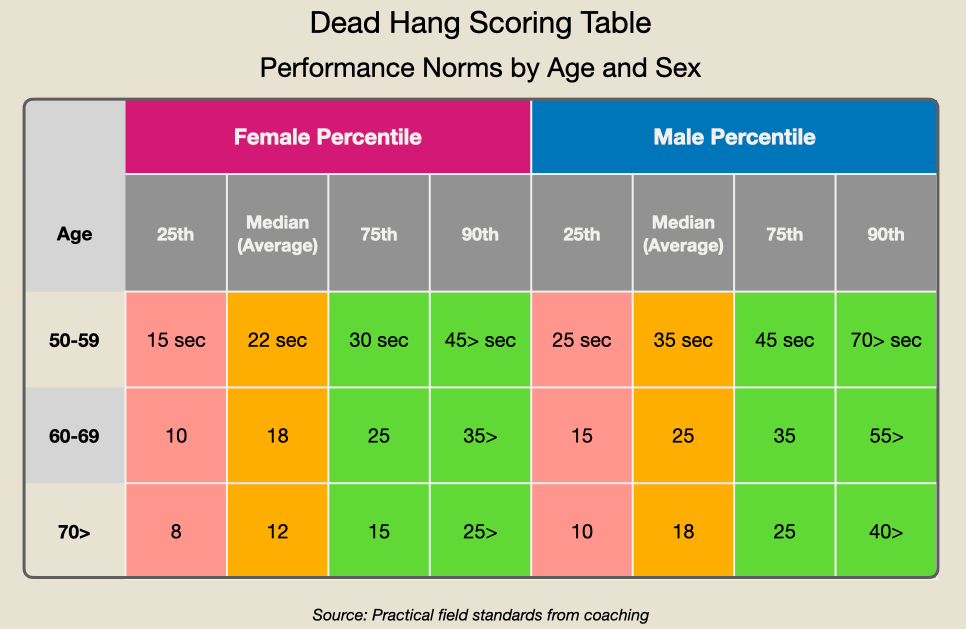
If you find yourself below the lower bands, it’s a sign to start building grip and upper-body strength gently. Around the median (average), you have a reasonable base, keep going. If you’re in the upper bands, well done, especially if you’re not already training hangs.
Remember, fitness is specific. A rock climber, gymnast or regular lifter may do very well on this test. Someone who walks every day and has excellent cardiovascular fitness may consider themselves fit, then be given a rude awakening when trying this test. The bar can be rude like that.
How to improve your score
For most people over 50, a good goal isn’t to chase heroic numbers. Try to move one band up. If you eventually reach 60 seconds, that’s more than enough for most people and most situations. That is, of course, unless you’re planning on joining the elite who want to hang from a helicopter in an action film. The joining fee for this is 2 minutes of hanging.
The key to progress is regular, manageable practice. Try to engineer a way to work it into an existing routine, also known as ‘habit stacking.’ I used to take my dogs out every day and made a point of walking past the outdoor fitness area for a quick dead hang while my pooches looked for squirrels to terrorise. All parties happily multi-tasking.
If a full hang is too much, start with a supported hang. Keep your feet on a box or bench and take only part of your bodyweight through your hands. Build up with short holds of 10 to 20 seconds, repeated a few times, two or three times a week. Gradually take less support through your feet as your grip and shoulders adapt.
You can also improve your grip with farmer’s carries, suitcase carries, rows, deadlifts, or simply carrying awkward shopping bags without immediately outsourcing the job to someone younger. The aim is to make grip part of normal strength training, not a strange little punishment you do at the end.
The real value of the test is not the number itself. It’s the regular reminder. Grip strength is easy to ignore until it starts to disappear. Then suddenly jars, bags, tools, rails, handles and the general equipment of adult life become more demanding than they used to be. The dead hang gives you a simple way to check whether you’re still holding your own.
And if the first dead hang attempt is humbling, that’s fine. Many useful healthspan tests are rude awakenings at the beginning. That’s often the sting that drives the change.
Let me know how you get on.
Cheers 👋
Stuart
Medical Disclaimer: This article is for general information only and does not constitute medical advice. The needs of every reader are unique; please consult your GP or a qualified healthcare professional before making changes to your diet, exercise routine, or medication. Never ignore professional medical advice because of something you read online.