

What Opening a Pickle Jar Says About Your Healthspan
Even if gherkins aren't your thing, a strong grip for your age reveals a surprising amount about your current and future healthspan.

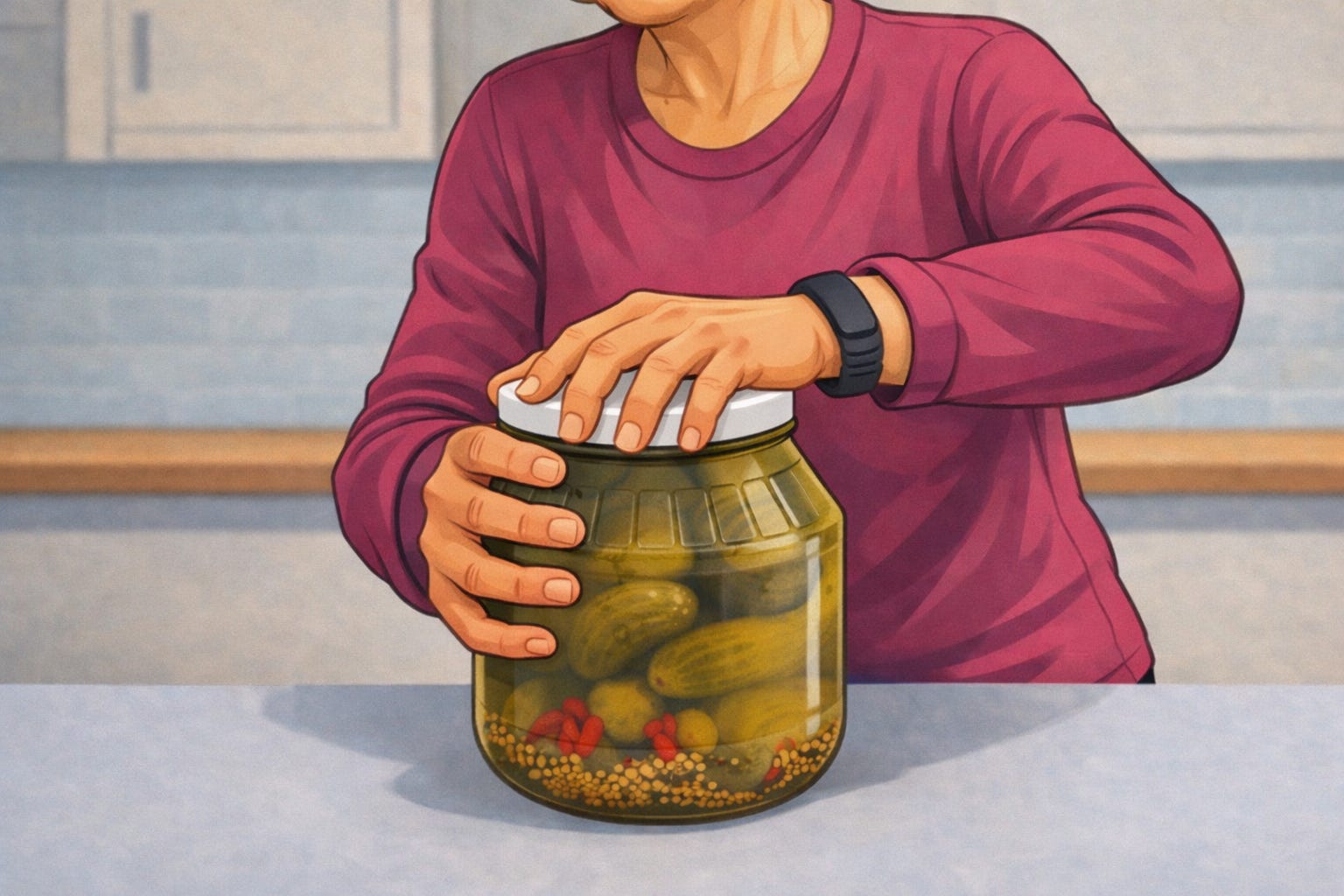
A strong grip can do more than get you into the pickle jar. It’s what researchers call a biomarker of ageing.
In plain English: it gives a snapshot of how well your body is holding up, particularly in relation to a decline in muscle mass and strength—a process known as Sarcopenia.
The problem is, it happens quietly. You don’t notice it day to day.
Until one day:
Opening jars becomes a struggle
Carrying shopping feels harder
Picking up that holiday suitcase takes more effort than before
Grip strength provides a useful metric—so useful that low grip strength is one of the criteria used to diagnose Frailty Syndrome.
Which is why this test matters.
It’s not about your handshake.
It’s about your future independence.
How to do the test
To do this test you’ll need a contraption called a Grip Strength Dynamometer. I bought mine with my own money (no freebies or sponsorships) on Amazon.
I chose the CAMRY Digital Grip Dynamometer. Cheaper ones are available but I particularly like the digital readout and instant results feedback.
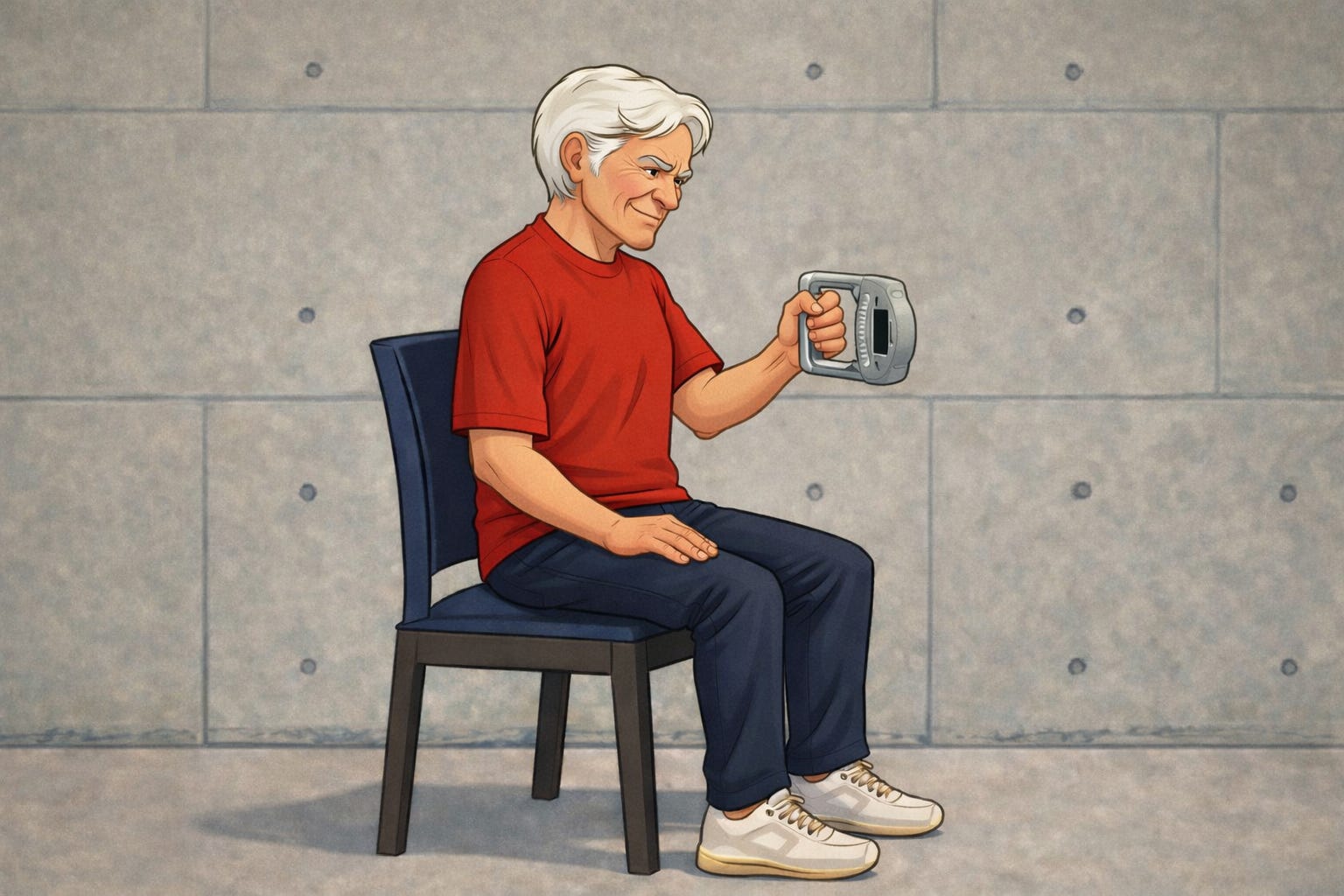
The test:
Sit on a chair with no arms, upright and your back supported, feet flat on the floor.
Hold the dynamometer in one hand with your arm at the side and elbow bent at 90°
Squeeze as hard as you possibly can for 3-5 seconds and record the score in kg. Do this twice more for the same side and keep the highest score.
Repeat on the other side and use the highest score from both.
Now check the scores against your age and sex standards to find out how you compare.
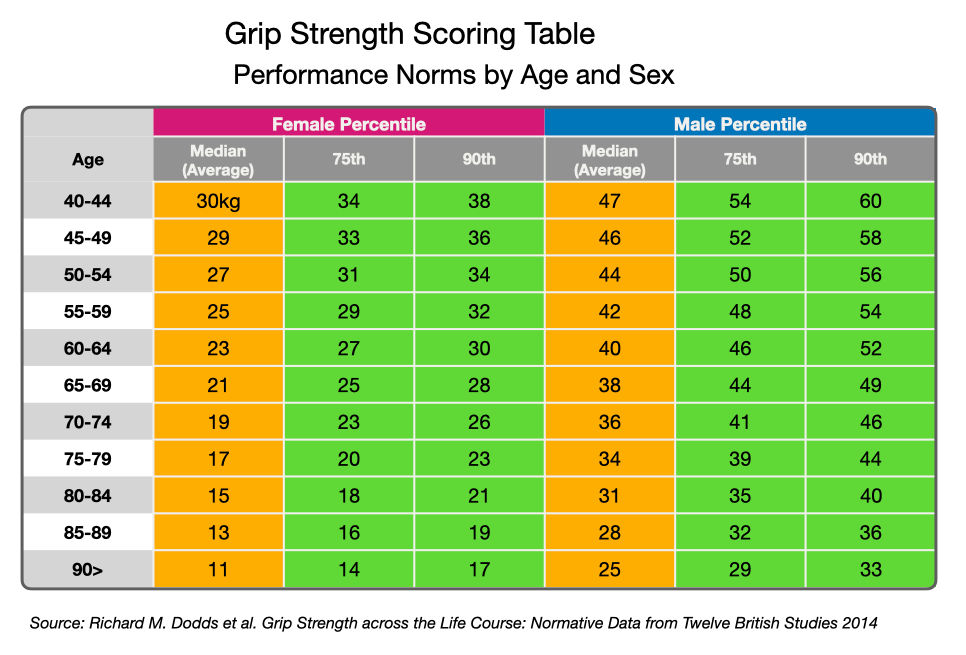
For example, my best score as a 65 year-old was 47kg. This places me above average for my age and sex and gives me the average grip strength of a 40-44 year-old. I’ll take that!
Making sense of your score
Think in three zones:
1. Above Average
You’re in a strong position.
This usually reflects:
Good muscle mass
Better metabolic health
Lower risk of frailty
Keep doing what you’re doing.
2. Average
You’re where most people are.
Which sounds fine — until you remember:
Who wants to be average?
It’s good to have a higher score to improve your ‘functional reserve’, leaving you with enough capacity for those unexpected events that always come along when you least expect them.
3. Below threshold (frailty risk)
Widely used cut-offs:
Men: below 27 kg
Women: below 16 kg
Below this level, risk increases for:
Falls
Loss of independence
Early mortality
This is where action matters most.
How to improve your score
The good news: grip strength responds well to training.
1. Lift heavy things, properly
Nothing fancy required, focus on:
These train grip and the rest of your body.
2. Hang around
Hanging from a pullup bar (aka The Dead Hang), is powerful exercise for the whole body, but in particular for building up grip strength. The longer you can hang, the better your grip.
3. Train your whole body
Grip strength reflects total body strength.
Prioritise:
Resistance training 2–3× per week
Adequate protein intake
Recovery (sleep matters more than you think)
4. Retest regularly
Every 3-4 months is a useful interval to give enough time for you to work on maintaining and improving your score.
You’re looking for small, steady improvements. Remember: progress not perfection
Work consistently, keep a beady eye on your scores, and that pickle jar won’t stand a chance for years to come.
If you try the test, and you’re in a sharing mood, post your score in the comments.
Medical Disclaimer: This article is for general information only and does not constitute medical advice. The needs of every reader are unique; please consult your GP or a qualified healthcare professional before making changes to your diet, exercise routine, or medication. Never ignore professional medical advice because of something you read online.