

Beyond BMI: Why Waist-to-Height Ratio May Be a Better Measure
Two people can have exactly the same BMI result, yet one may be at far greater risk. This simple test can reveal more than bodyweight alone.

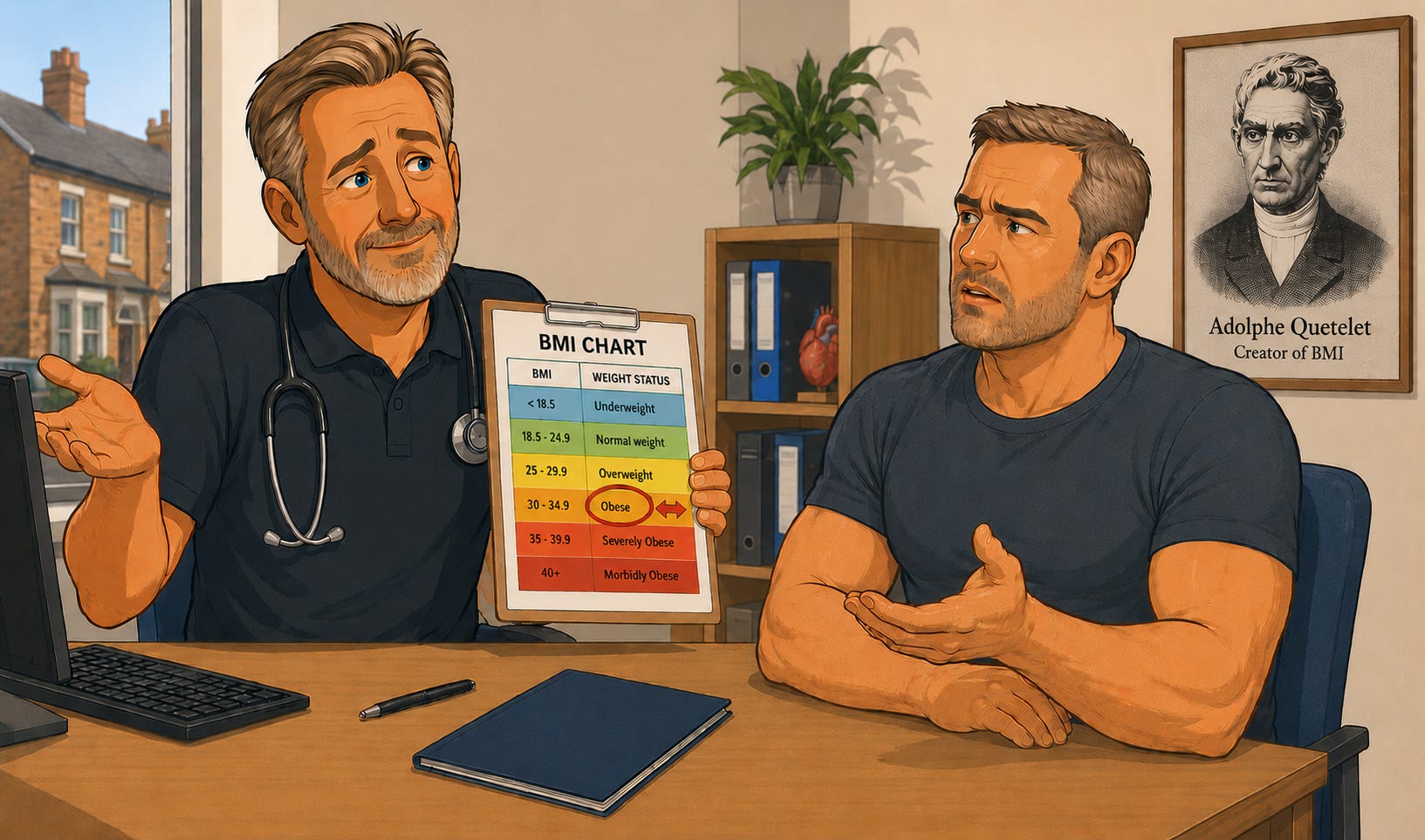
For decades, BMI has been the default method to judge whether someone is a healthy weight.
Visit your GP, complete an online health questionnaire or read an article about obesity and there’s a good chance BMI will make an appearance.
The problem is, BMI was never designed to measure an individual’s health.
It was developed in the 1830s by Belgian mathematician Adolphe Quetelet as a statistical tool to describe populations, not to assess body fat or disease risk in individual people.
The formula is simple, and its simplicity probably explains why it became so widely used. Unfortunately, simplicity comes with limitations.
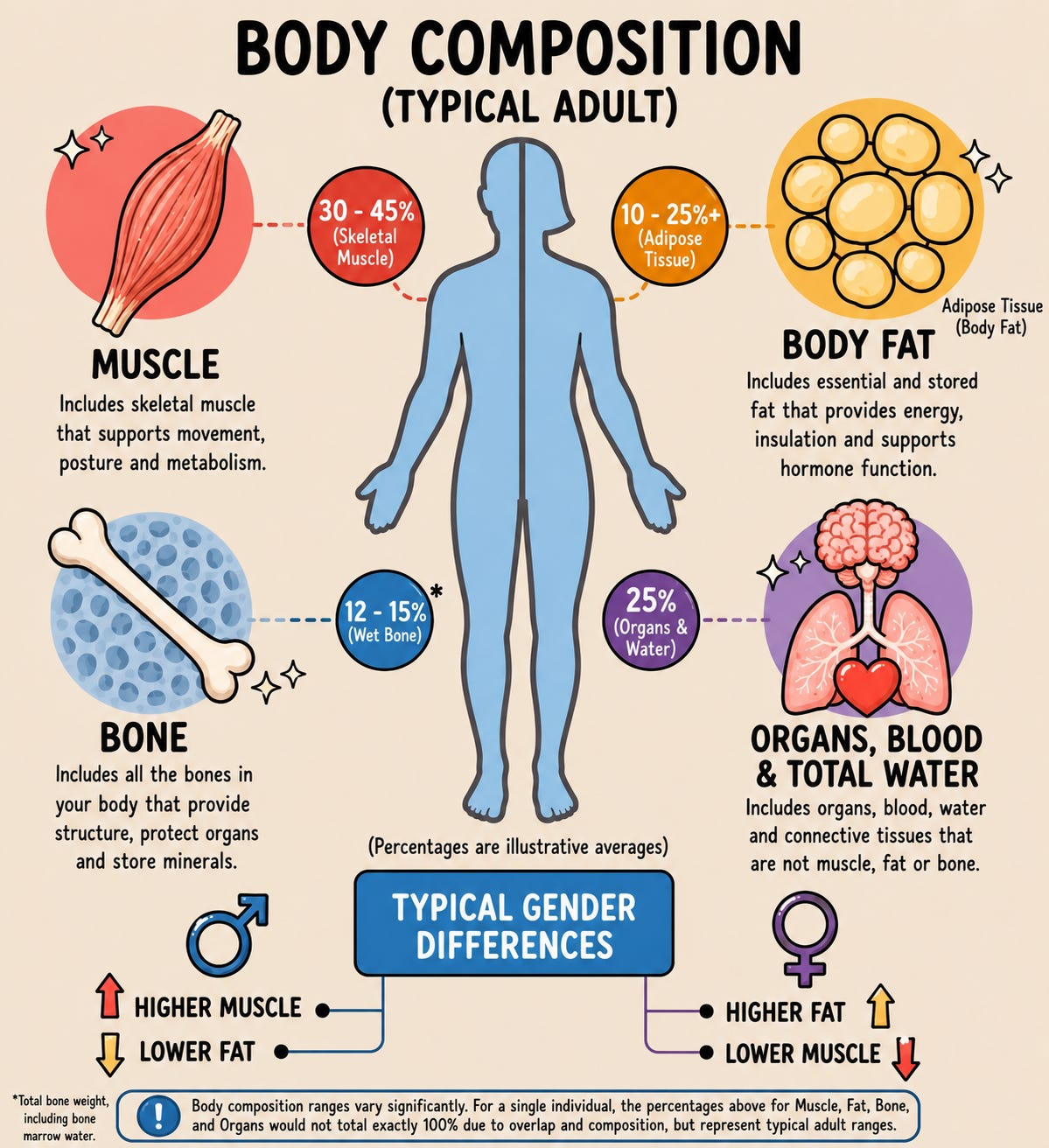
BMI can’t distinguish between muscle and fat. It doesn’t tell us where fat is stored. It can’t identify dangerous visceral fat around the internal organs. A muscular former rugby player and a sedentary older adult with a large waistline could have exactly the same BMI while having very different health risks.
As researchers have looked for better ways to assess health risk, one measure has come to the fore: waist-to-height ratio.
What this test measures
Waist-to-height ratio (WHtR) compares your waist measurement to your height.
Unlike BMI, which measures body mass relative to height, waist-to-height ratio provides a simple indication of how much abdominal fat you are carrying.
This is important because not all fat behaves the same way.
The fat stored around the abdomen, particularly visceral fat deep inside the abdominal cavity, is associated with increased risks of:
Heart disease
Type 2 diabetes
High blood pressure
Stroke
Metabolic syndrome
Premature mortality
Waist-to-height ratio acts as a practical indicator for this risk.
Rather than asking “How much do you weigh?”, it asks a more useful question:
How much of your body size is taken up by your waist?
Why it matters
As we get older, our body composition changes.
Many adults gradually lose muscle mass while gaining fat, particularly around the midsection. Body weight may stay relatively stable even though health risks are increasing.
BMI can’t see this.
As a result, someone can have a “normal” BMI while carrying unhealthy levels of abdominal fat.
Researchers sometimes refer to this as being “skinny fat”.
A major review of 78 studies found that waist-to-height ratio was a better predictor of cardiometabolic risk than BMI. Researchers concluded that it identified people at risk of cardiovascular disease and type 2 diabetes more effectively than BMI alone.
The beauty of waist-to-height ratio is that it’s simple enough for anyone to measure at home while remaining strongly linked to health outcomes.
How to do the test
Taking the test couldn’t be simpler. You’ll need:
A tape measure
Your height in centimetres or feet and inches
Click the button to start your measurement:
Making sense of your score
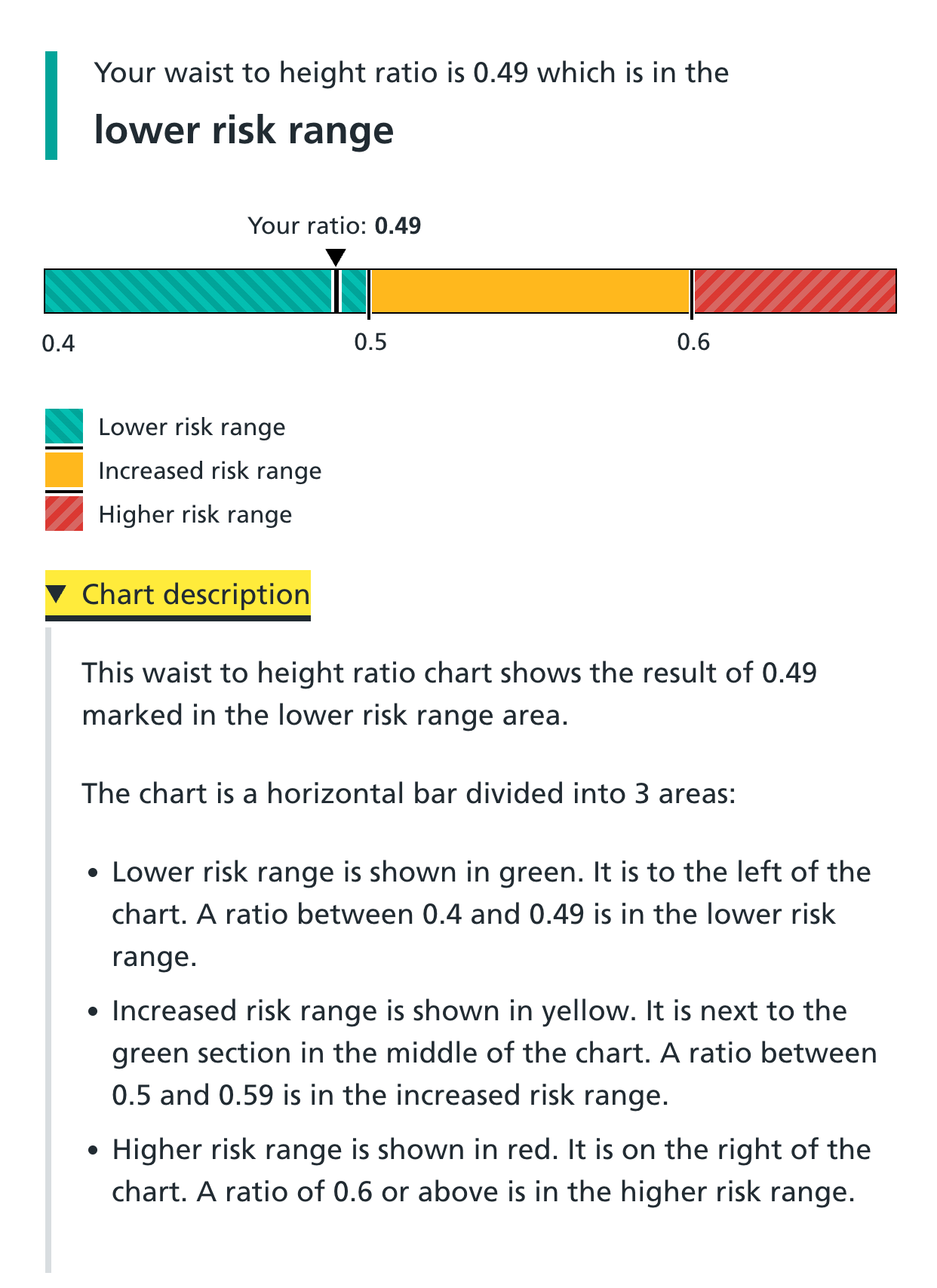
For most adults, particularly those over 50, keeping your waist below half your height is a sensible target.
It’s not a guarantee of good health, but it’s a useful marker that you’re less likely to be carrying excessive abdominal fat.
How to improve your score
The good news is that waist-to-height ratio is highly responsive to lifestyle changes.
With a few changes and a little effort, your waist measurement can change surprisingly quickly.
The same habits that improve healthspan tend to improve waist-to-height ratio too:
Get moving—regular physical activity (particularly higher intensities) helps reduce visceral fat, even if body weight changes very little.
Join the resistance—one of the most effective ways to improve body composition is to build or preserve muscle with resistance exercise.
Plenty of protein—higher protein diets (around 1.2g per kilogram of weight) help preserve muscle during weight loss and support healthy ageing.
Eat Mostly Whole Foods—minimising ultra-processed foods and focusing on vegetables, fruit, legumes, whole grains and lean protein sources can help create the calorie deficit needed to reduce waist size.
Improve Sleep—poor sleep is associated with increased abdominal fat and weight gain.
A simple way to keep track of your progress is to cut piece of string to half your height and regularly checking if the ends can meet around your waistline.
The bottom line
BMI isn’t useless.
It remains a useful population-level measure and has played an important role in public health for decades.
But if your goal is understanding your personal health risk, especially after the age of 50, waist-to-height ratio is arguably the better tool.
It focuses attention on abdominal fat, which is far more closely linked to disease risk than body weight alone.
The rule is simple:
Keep your waist to less than half your height.
It’s one of the simplest health tests you’ll ever do, and one that may tell you more about your future health than your BMI ever could.
Give it a go today.
Let us know your how you got on in the comments.
Medical Disclaimer: This article is for general information only and does not constitute medical advice. The needs of every reader are unique; please consult your GP or a qualified healthcare professional before making changes to your diet, exercise routine, or medication. Never ignore professional medical advice because of something you read online.