

A Practical Guide to Cutting Through the Health Noise
This Book Could Save Your Life: The Science of Living Longer Better by Graham Lawton

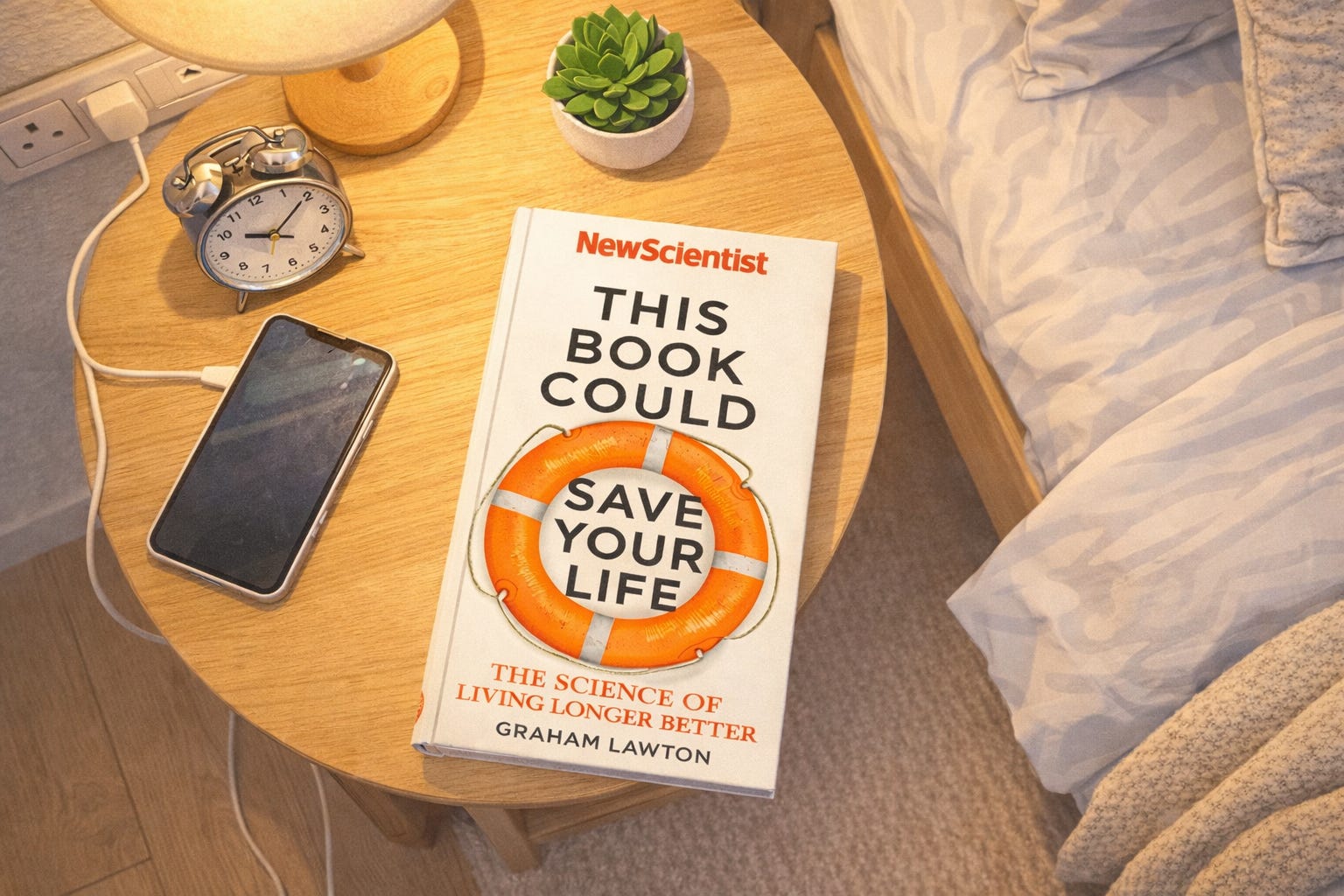
The book in a nutshell
This Book Could Save Your Life by New Scientist staff writer, Graham Lawton is an evidence-based manual designed to cut through the sensationalist headlines and “unscientific mumbo jumbo” that dominate the wellness industry.
Lawton, a science journalist with a background in biochemistry, evaluates the “totality of the evidence” to provide actionable advice on nutrition, exercise, sleep, and ageing.
It’s a book for those who want to base their health choices on published research rather than fad diets or quick fixes from “influencers” or celebrities. Amen to that.
The big idea
Lawton claims that while biomedical science is complex and often contradictory, a healthy lifestyle isn’t a mystery—it’s a matter of following established scientific principles to slow down the ageing process and extend “healthspan” (the number of years we live in good health).
Lawton argues that our modern “obesogenic” environment is at odds with our evolved physiology, but by using science to understand willpower and habit formation, we can reclaim our health and live better for longer.
Key insights
Nutrition: Much of what we thought we knew about food is being re-evaluated.
While saturated fat is no longer the sole “villain,” replacing it with refined carbohydrates and sugar was probably a mistake. The healthiest diet remains Mediterranean-style: high in fibre, fruits, vegetables, and unsaturated fats from oily fish and nuts.
Exercise: Exercise has the potential to prevent more premature deaths than any other medical intervention. In fact if it were a drug, it would classed as a ‘miracle pill.’
Sleep: Sleep is not just a period of rest; it’s a vital biological “waste disposal” process, removing proteins linked to Alzheimer’s.
Supplements: For most well-nourished people, multivitamins and antioxidant pills are “money down the drain” and can even be harmful. Whole foods are always the superior source of nutrients, according to Lawson.
Biological vs. Chronological Age: Your biological age reflects the actual decline of your cellular repair mechanisms. This can be influenced by lifestyle choices—unlike chronological age, biological age can go down as well as up.
What to do with this information
Get Moving (Now): Any amount of exercise is better than none.
If you have a desk job, stand up and move for at least one minute every 30 minutes to break up sedentary periods.
Prioritise Sleep Hygiene: Aim for at least seven hours of sleep.
Keep your bedroom cool (around 18.5°C) and dim the lights an hour before bed to support melatonin production.
Audit Your “Meds” and Supplements: Stop taking routine supplements unless you have a diagnosed deficiency. Consult your doctor before self-medicating with aspirin or other daily drugs.
Expose Yourself to Daylight: Spend at least 20 minutes outside every morning
This resets your master circadian clock, boosting daytime alertness and night time sleep quality.
Nurture Social Ties: Loneliness has a health impact as detrimental as smoking or obesity. Focus on the quality of your relationships; dedicating time to an “inner circle” of five close people is key.
The one takeaway
On this, Lawton is clear “Get Moving”.
While diet and sleep are foundational, physical activity is the most potent, accessible, and scientifically validated tool for preventing chronic disease and extending a high-quality life.
This book is for:
The “overwhelmed” consumer who’s tired of conflicting and contradictory health advice.
Those who want a “manual for a healthy lifestyle” that’s rooted in rigorous scientific journals rather than wellness blogs or celebrity plans.
The person who values “the totality of the evidence” over the latest social media trend.
Those who prefer an occasional book to ‘dip-in’ to, rather than a long continuous read.
My rating
★★★☆☆
Medical Disclaimer: This article is for general information only and does not constitute medical advice. The needs of every reader are unique; please consult your GP or a qualified healthcare professional before making changes to your diet, exercise routine, or medication. Never ignore professional medical advice because of something you read online.