

A Vital Test of Balance You Can Measure in Your Living Room
The late Dr. Michael Mosley advocated having a one-legged "wobble" every day. Here's why he was spot on and how you can try it yourself.

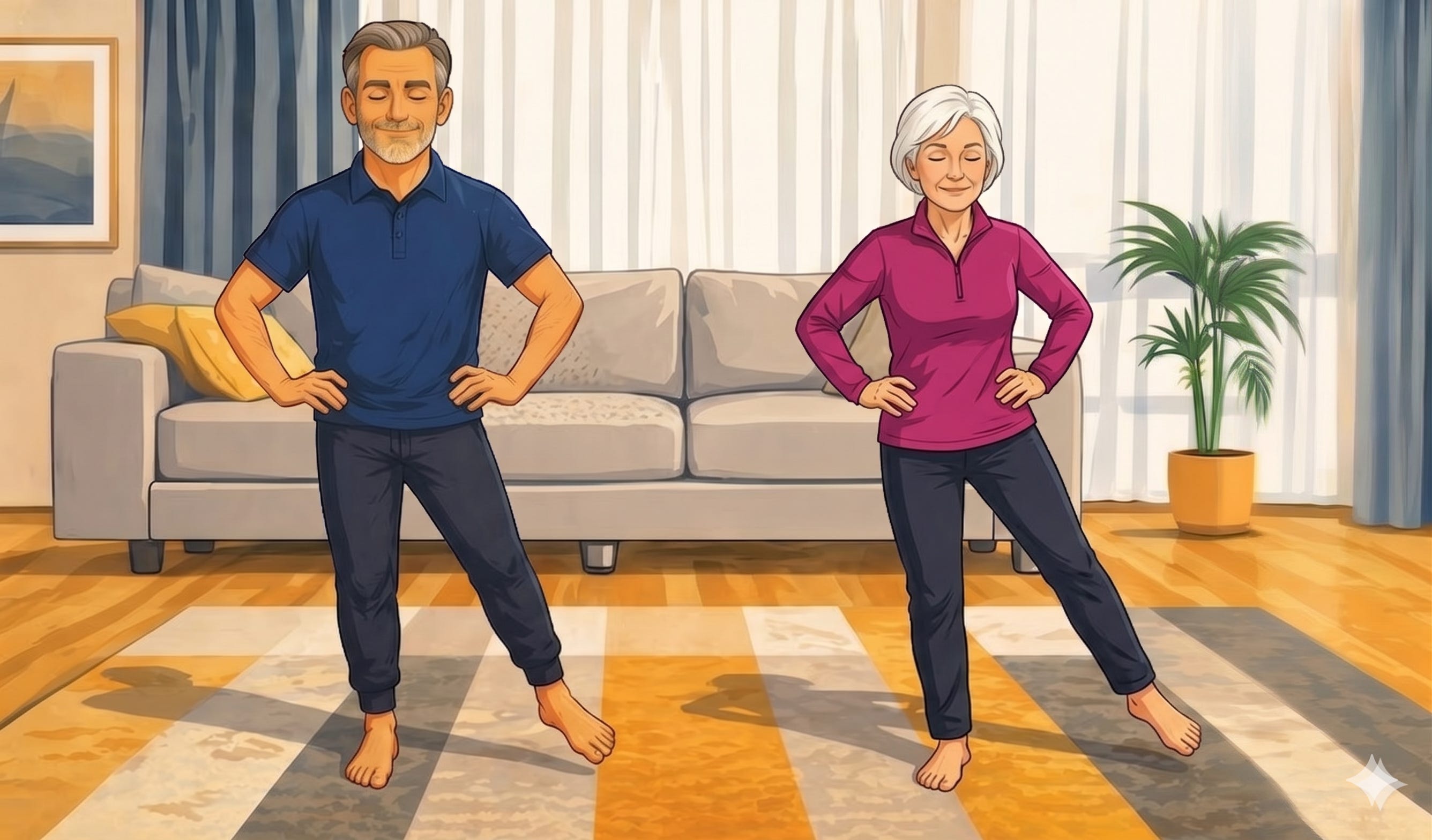
In a world of high-tech wearables and expensive lab tests, it’s easy to overlook the simplest indicators of healthspan and healthy ageing. One of the most useful tests of your future health doesn’t even need a lab—just you, a floor, and a timer.
I’m talking about the single-leg balance test.
It sounds basic. Most people assume they’re “fine”. But the data behind it is anything but trivial. If you want a quick, objective measure of how well key systems in your body are ageing, it’s time to stand up and be counted.
What this test measures
The big three
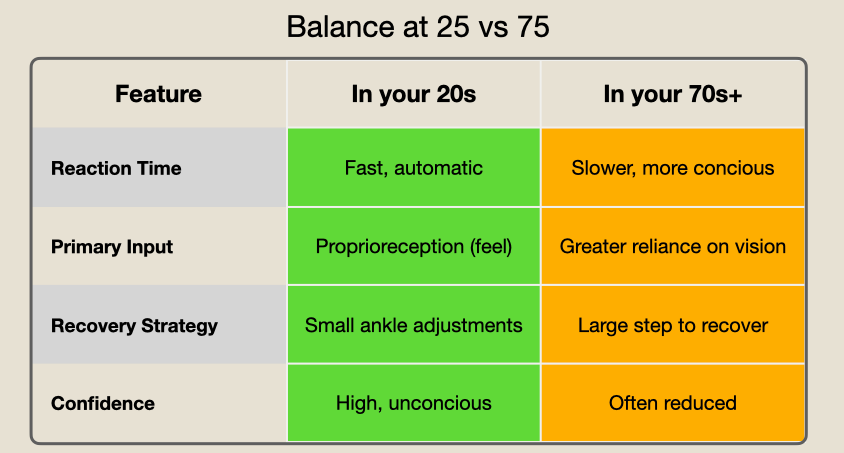
In order to stay upright on one leg, your brain has to integrate three systems into a constant, behind-the-scenes symphony of balance. Ageing affects all of them:
The inner ear (vestibular system): Your internal spirit level. The tiny hair cells that detect motion and gravity gradually decline with age, reducing your sense of orientation.
Proprioception: Your “sixth sense”—the ability to know where your limbs are without looking. This becomes less precise over time.
Vision: You rely heavily on visual cues to stay upright. Age-related changes—reduced depth perception, slower light adaptation, cataracts—make this less reliable, especially in low light.
Muscles and bones
Even if your “sensors” are working, your “motors” also need to respond quickly:
Sarcopenia: Age-related muscle loss, particularly fast-twitch fibres, reduces your ability to react quickly and “catch” yourself.
Joint stiffness: Wear and tear in the hips, knees and ankles limits your ability to adjust your centre of gravity quickly.
Cognitive processing speed
Balance isn’t just physical—it’s neurological.
Your brain must process incoming sensory information and send corrective signals in milliseconds. With age, this processing slows slightly.
Add a second task—walking while talking, for example—and your brain may prioritise the conversation over balance.
That’s when trips and stumbles happen.
Why it matters
Why care if you can stand on one leg for a few seconds?
Because balance is strongly associated with overall health—and decline often shows up here early.
A study published in the British Journal of Sports Medicine found that people in mid-to-later life who couldn’t hold a 10-second single-leg stance had a significantly higher risk of death from any cause over the following decade.
This doesn’t mean poor balance causes early death. But it’s a useful marker of underlying health in areas you’ll be more reliant on as you get older.
More practically:
Poor balance is linked to frailty and cognitive decline
It’s a strong predictor of fall risk. This is important as falls are the leading cause of injury-related hospital admissions in UK adults over 65
In short: better balance supports independence, mobility and capability.
How to do the test
Do this barefoot on a firm, level surface (avoid thick carpet).
Set-up: Stand near a wall or sturdy furniture for safety—but don’t use it unless needed.
The lift: Hands on hips. Lift one foot off the floor without touching your standing leg.
Eyes open, then closed: Test once with eyes open. Rest, then repeat with eyes closed.
Stop timing when:
Your raised foot touches down
Your hands leave your hips
Your standing foot moves or hops
(Eyes closed version) you open your eyes
Don’t forget to time yourself on each leg to check for any imbalances.
Making sense of your score
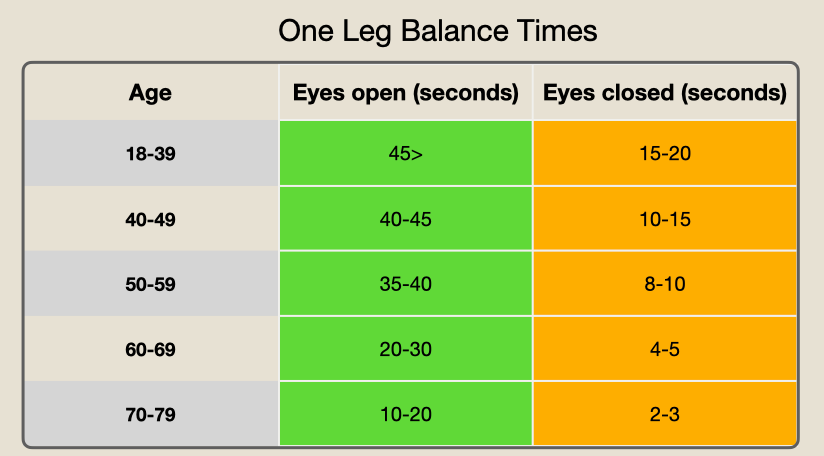
Closing your eyes removes visual input, forcing your body to rely on just your inner ear and proprioception. It’s much harder—and more revealing.
Typical benchmarks for healthy adults:
Simple interpretation:
Eyes open <10 seconds → potential red flag for reduced physical resilience
Eyes closed near zero → heavy reliance on vision
That second point matters more than most people realise. If your balance collapses without visual input, you’re more vulnerable in the dark or in poor lighting—from night-time trips to the bathroom, uneven pavements, and rogue rugs.
How to ace your next test
Now for the good news: balance is highly trainable.
Small, consistent efforts make a difference surprisingly quickly.
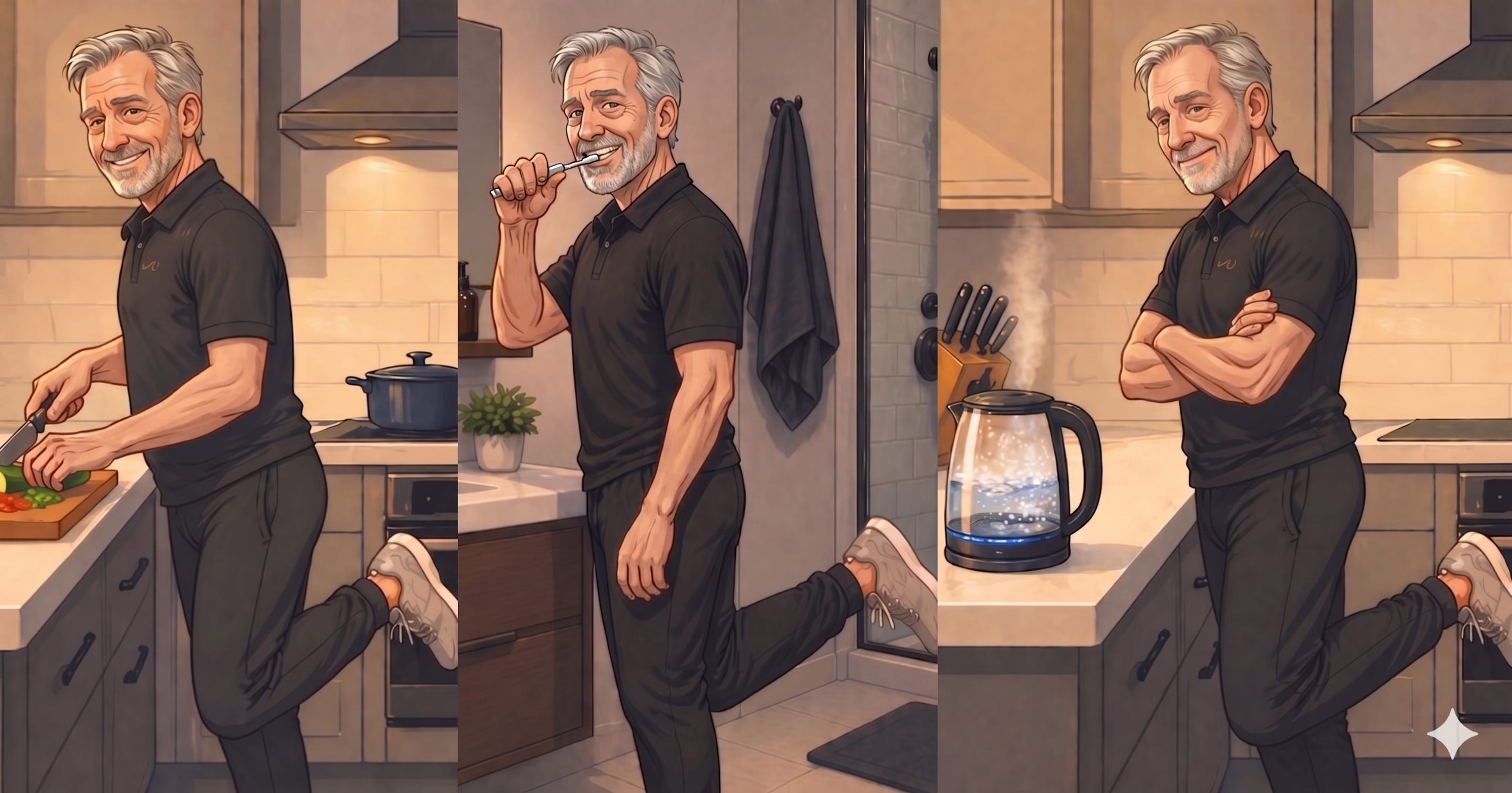
Habit stacking: Linking balance training with an already established habit will ensure you get started and keep at it, without really trying. For example:
Make like a stork when chopping vegetables in the kitchen.
Stand on one leg while brushing your teeth. Switch halfway through. Easy win.
Fancy a cuppa? Aim to stay on one leg until the kettle boils.
Gradually remove visual support: Start with eyes open, fixed gaze. Progress to brief eye closures (2–3 seconds), then build up.
Increase instability: Stand on a thick towel or a foam pad to make your base more unstable. If you’re feeling brave, try a wobble board.
Give it a go today.
You might feel like a steady oak—or a wobbly willow in a breeze. Either way, it’s useful information.
Because knowing where you stand is the first step to staying upright for as long as you can.
How did you get on? Let us know your scores in the comments.
Medical Disclaimer: This article is for general information only and does not constitute medical advice. The needs of every reader are unique; please consult your GP or a qualified healthcare professional before making changes to your diet, exercise routine, or medication. Never ignore professional medical advice because of something you read online.