

Lessons from a Chess Match with Death
One of the strangest things about modern life is how much time we spend pretending we’re not going to die. A little memento mori can be surprisingly life-affirming.

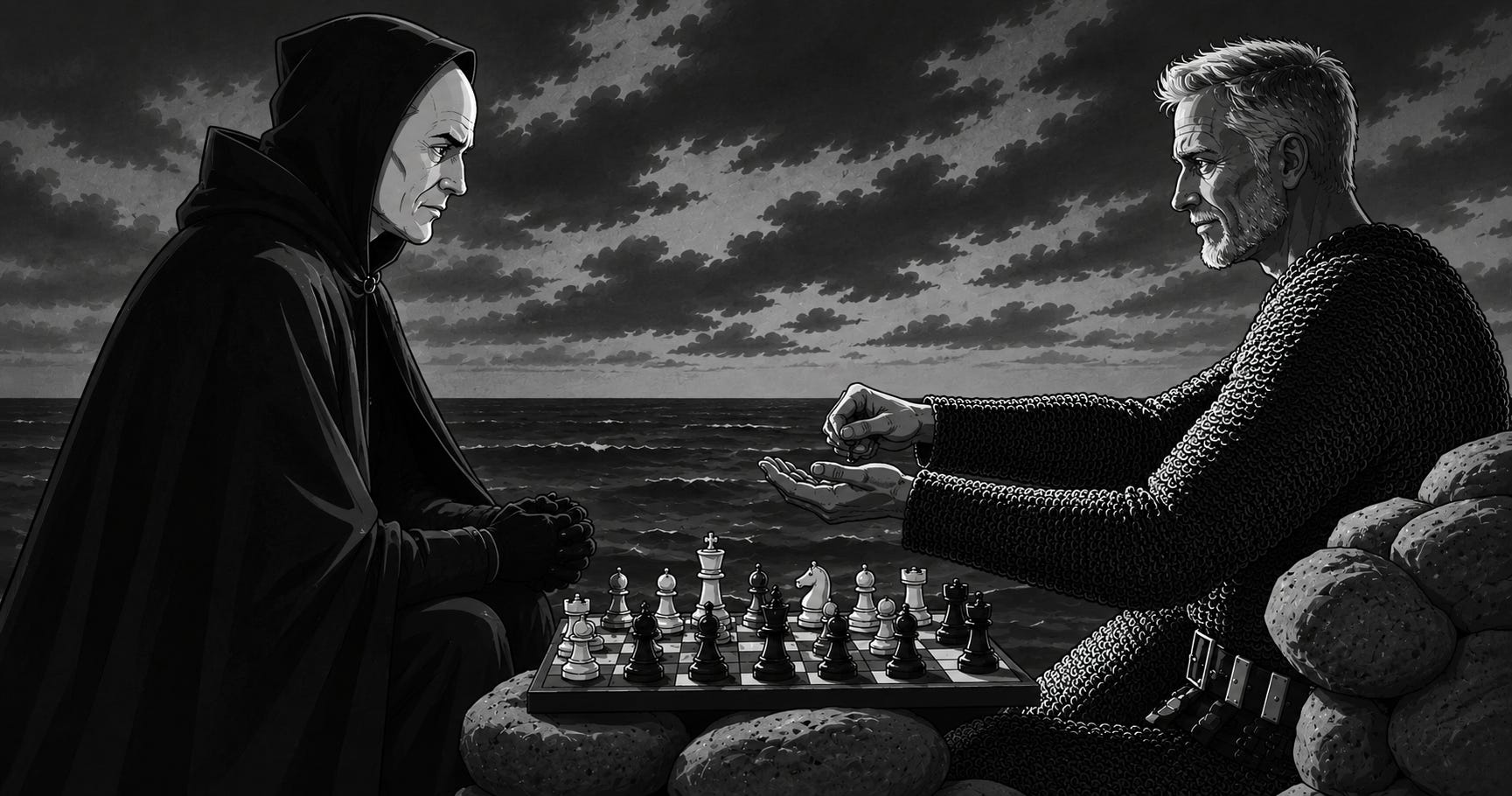
“It is not that we have a short time to live, but that we waste much of it.”
– Seneca
If you were to look at the amount of advertising and promotion for anti-ageing products and services, you may think you stumbled upon some kind of unfortunate affliction, rather than a natural process. Ageing seems to be a dirty word; and we’re told we should all become anti-ageing consumers.
We rarely talk about mortality until it arrives uninvited—in a hospital ward, a funeral chapel, or a phone call in the middle of the night.
Death has gradually become something to hide. We outsource it to hospitals and care homes, smooth away its rough edges with softer language. The irony, of course, is that death has never been ‘separate’ to life. It’s always there. We’re just busy pretending it isn’t coming for us.
Lessons from a chess match with death
That thought occurred to me while rewatching The Seventh Seal, Ingmar Bergman’s extraordinary 1957 film. If you’ve never seen it, the premise sounds almost comically bleak. A medieval knight, Antonius Block, returns home from the Crusades to find Sweden ravaged by the Black Death. On a deserted beach, he meets Death itself—dressed in black, arrived to claim him. The knight challenges Death to a game of chess, hoping to delay the inevitable while he searches for proof that life means something before his final move.
It’s one of cinema’s most famous images, but the chess game isn’t really about winning. Death never loses. The real question is how you spend the time while the pieces are in play on the board.
As the knight travels through the plague-stricken country, he encounters frightened villagers, religious fanatics, travelling actors, and ordinary people trying to make sense of suffering. He spends much of the film searching for certainty. Is there a God? Is there a grand purpose? Can anyone know why we’re here?
Bergman offers no definitive answers. Instead, he points the audience somewhere else entirely.
The most memorable moments in the film aren’t theological debates or dramatic revelations; they’re surprisingly ordinary. A family sharing strawberries and fresh milk. Friends talking together. Acts of kindness. Simple companionship in the middle of chaos.
The suggestion is beautifully understated: perhaps meaning isn’t something to be discovered through intellectual study. Perhaps it’s something that accumulates through being truly present in ordinary moments while they’re happening.
The 4,000-week life
Nearly seventy years later, author Oliver Burkeman arrives at a similar conclusion from an entirely different direction.
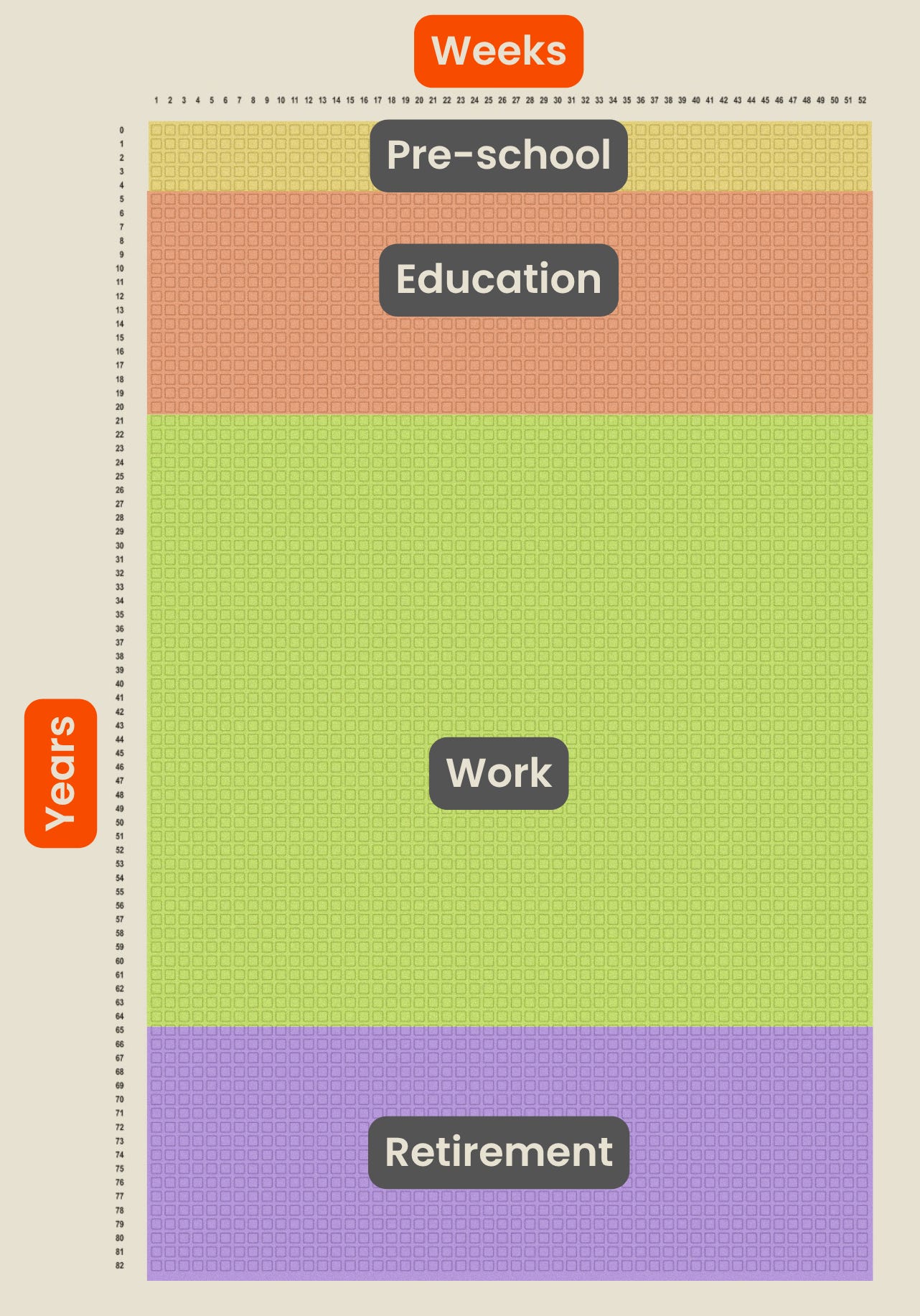
His book Four Thousand Weeks begins with an uncomfortable piece of arithmetic: if you live to around eighty, you’ll have roughly 4,000 weeks on Earth.
That sounds like plenty until you realise how quickly the weeks disappear. Childhood occupies the first quarter almost before you’ve noticed. Work, family responsibilities, and life’s endless admin consume another large chunk. Suddenly, “I’ll get round to it someday” starts looking rather more urgent.
Burkeman argues that modern life encourages a fantasy: that with enough productivity hacks, better calendars, and more efficient morning routines, we’ll eventually get on top of everything. There will come a magical moment when the inbox is empty, the house is organised, our health is optimised, and we can finally begin living ‘properly.’
Except that moment never arrives.
There will always be more books than you can read, more places than you can visit, more ambitions than you can fulfil, and more emails than any sane person should ever receive. ‘Optimisation’ rarely creates peace. More often, it creates fresh demands and a longer to-do list.
The real problem, Burkeman suggests, isn’t that life is short. It’s that we resist the fact that it’s limited.
Once you accept that you won’t get to do everything, something unexpected happens: the pressure eases. Every decision inevitably means saying no to something else. You just need to choose wisely.
His most useful idea is that many of life’s most valuable pursuits have no finish line: friendship, reading, walking, marriage, gardening, parenting. You never ‘complete’ them. There’s no certificate congratulating you on finishing friendship or reaching Level 10 of marriage.
They matter the most while you’re doing them, rather than finishing them.
Optimising away the inevitable won’t work
That feels surprisingly relevant to the modern obsession with ‘longevity,’ otherwise known as ‘never dying.’
Much of the health and wellness industry sells the promise that we can somehow outwit ageing. We’re encouraged to use ‘protocols’ to optimise sleep, nutrition, blood biomarkers, muscle mass, heart rate variability, and mitochondrial function—often with the implication that enough optimisation might postpone mortality indefinitely.
As someone who spends a fair amount of time writing about healthspan, I understand the appeal. I exercise because I’d like my final decades to involve walking holidays rather than walking frames. I eat reasonably well because I’d prefer to remain independent for as long as possible. Strength matters. Fitness matters. Looking after your body absolutely matters.
But there’s an important distinction between preparing for a better old age and pretending nothing will change. Healthspan isn’t about recapturing youth; it’s about making the most of the life we have left.
A healthier perspective exists
Some cultures seem to understand this better than we do.
In Japan, there is the idea of mono no aware—an appreciation of the beauty of things precisely because they’re fleeting. Cherry blossom isn’t beautiful despite lasting only a few days; its temporary nature is the very source of its beauty.
In Mexico, the Day of the Dead doesn’t attempt to hide mortality behind closed doors. Families gather, remember relatives, tell stories, visit graves, and celebrate lives that are gone but not forgotten. Death isn’t denied; it remains part of the conversation.
Even in parts of southern Europe, where grandparents are woven naturally into everyday family life, ageing and dying feel less hidden than they often do in the UK.
Perhaps wealth has allowed us to push death further from daily view, but it hasn’t made us any more comfortable with it. If anything, the opposite is true: the less often we acknowledge our limited time, the more shocking those limits feel when they eventually appear.
The great leveller
That may explain why The Seventh Seal still resonates today. Bergman wasn’t really making a film about dying. He was making a film about what mortality asks of the living.
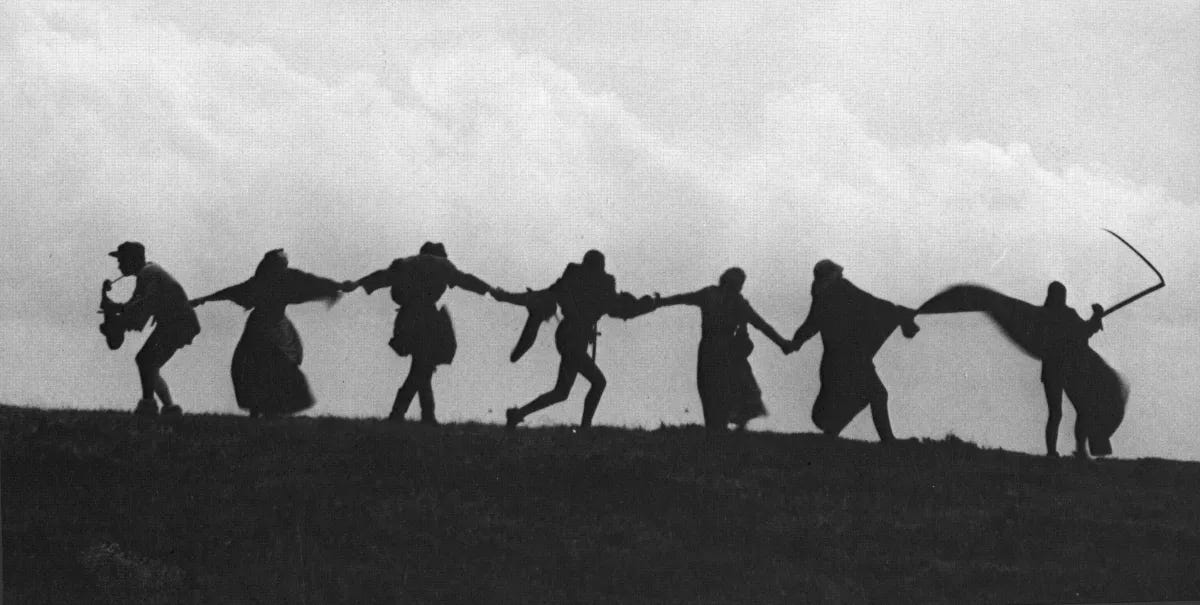
The final image—the famous Dance of Death silhouetted against the horizon—reminds us that kings, peasants, believers, sceptics, the clever, and the longevity influencer all leave the stage in exactly the same way. Death is the great leveller. Nobody negotiates a better contract.
If we really do have only around 4,000 weeks, then perhaps the goal is to bear in mind that our time is limited and use this knowledge to spend it on the things that really matter. Only you can decide what they are.
The chess match is already under way. We just don’t know how many moves remain.
If you want to document your own life on a page, download this pdf file. Each box represents one week in your life. I filled one in after my heart attack and it really brought home to me the gift of extra time I’ve been given.

Cheers 👋
Stuart
Medical Disclaimer: This article is for general information only and does not constitute medical advice. The needs of every reader are unique; please consult your GP or a qualified healthcare professional before making changes to your diet, exercise routine, or medication. Never ignore professional medical advice because of something you read online.