

Fancy 20 Extra Years of Health?
If you had to choose, would you rather: Live to 100 with 25 years of decline? Or live to 90 with 5? Living a long life and a healthy life aren't the same. We need to talk about healthspan.

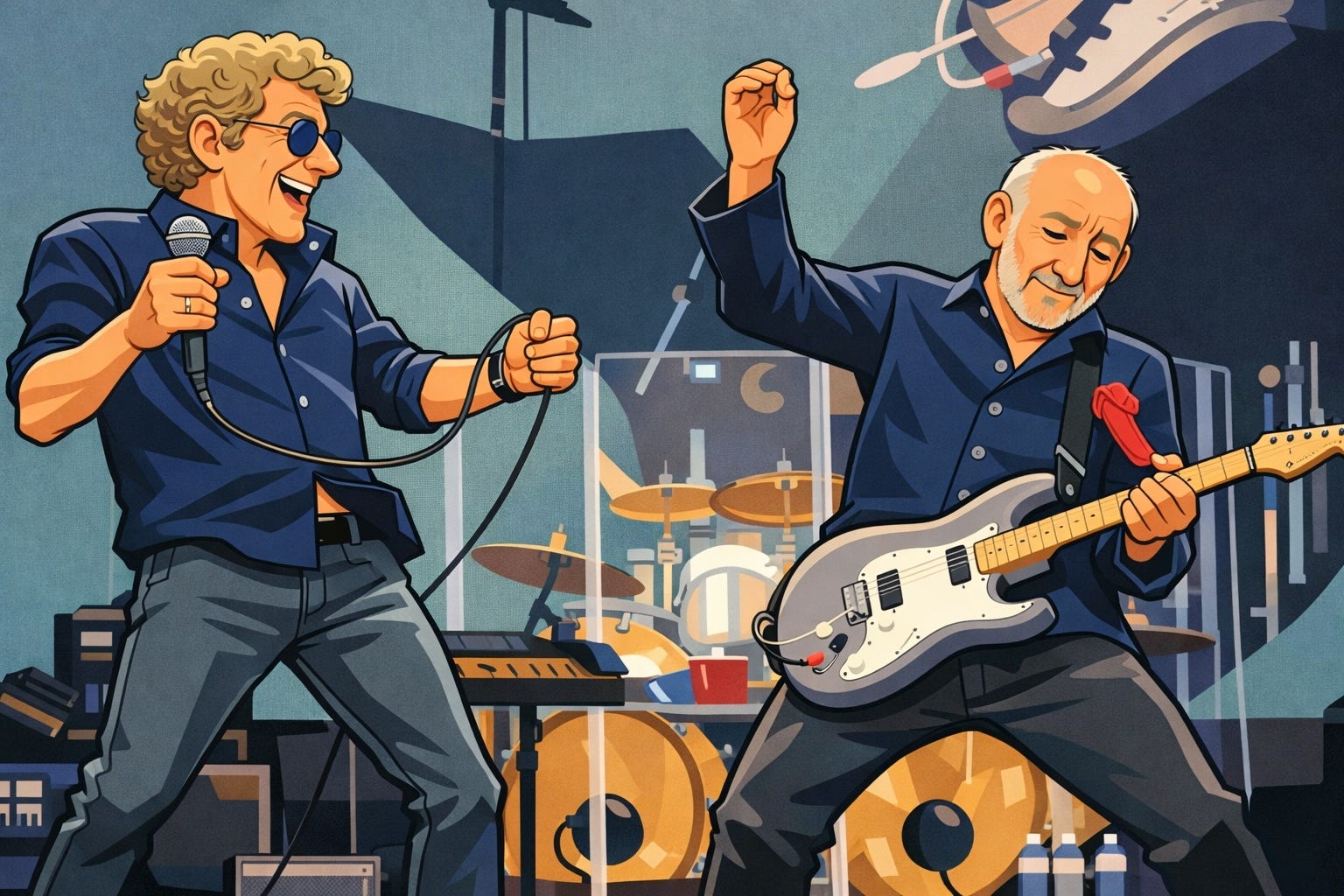
Are we just living longer… or better?
We’ve all said daft things when we were young. Very few of us, though, had those words immortalised in one of the most iconic songs in British rock history.
Step forward Pete Townshend of The Who.
He was about 20 when he wrote My Generation, complete with the line:
“I hope I die before I get old.”
Fast-forward six decades and he’s still going strong. Awkward? Perhaps. But when asked about it later, Townshend clarified that the lyric was about a state of mind, rather than chronological age.
Which raises the question:
What does “getting old” actually mean?
Years in your life vs life in your years
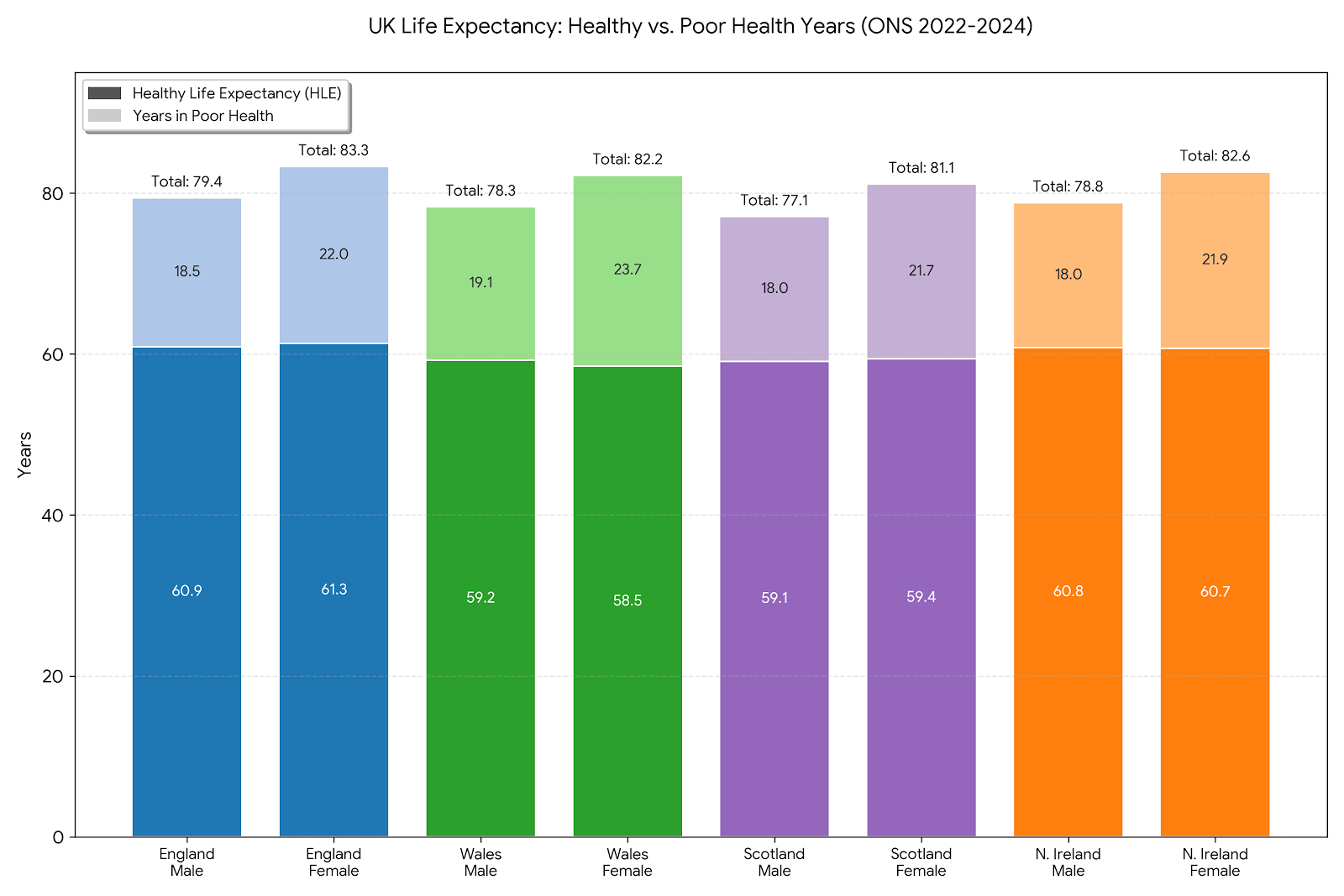
The good news is we’re living longer than any previous generation. According to the Office for National Statistics (ONS), life expectancy in England is around:
79 years for men
83 years for women
On the surface, that sounds like progress.
But here’s the catch: healthy life expectancy — the number of years spent in good health — is significantly lower.
For women in England, healthy life expectancy is just over 61 years. That means more than 21 years may be lived in poor health. For men, the figure is just over 18 years.
By any measure, that’s a substantial slice of life in poor health.
So the real question isn’t simply “How long will we live?”
It’s “How long will we live in good health?”
What is lifespan?
Lifespan is the total number of years lived — the time between birth and death. The longest verified human lifespan remains that of ‘supercentenarian’ Jeanne Calment, who lived to the ripe old age of 122.
A 2016 study from the Albert Einstein College of Medicine suggested that human lifespan may plateau at around 115-125 years, with the chances of living to 125 in any given year at less than 1 in 10,000. However, this finding remains contested by other researchers.
So, despite the noise from longevity influencers, we’re not on the brink of routinely living to 150.
Useful lifespan related terms:
Life expectancy — the average number of years a person is expected to live, based on current mortality rates.
Premature death — in the UK, typically defined as death before age 75.
Longevity — often used to describe relatively long survival within a population (for example, in so-called Blue Zones).
But while lifespan grabs the headlines, it isn’t the number most of us should obsess over.
Introducing healthspan
Healthspan (or healthy life expectancy) is the number of years lived in good health — free from significant disease, disability or cognitive decline.
Where lifespan counts years, healthspan counts healthy years.
It’s about:
Staying independent
Moving well
Thinking clearly
Avoiding long periods of frailty
The uncomfortable truth is that in the UK, the gap between lifespan and healthspan is large — and, in some cases, widening.
Your superpower: compressed morbidity
Thanks to the advances made in the developed world with medicine and healthcare, we’ve seen lifespan increase, but many people still spend a prolonged period managing:
Cardiovascular disease
Cancer
Frailty
Dementia
This period of illness is called morbidity.
The ultimate goal isn’t to eliminate ageing. It’s to compress morbidity — staying well for as long as possible, followed by a relatively short decline at the very end of life.
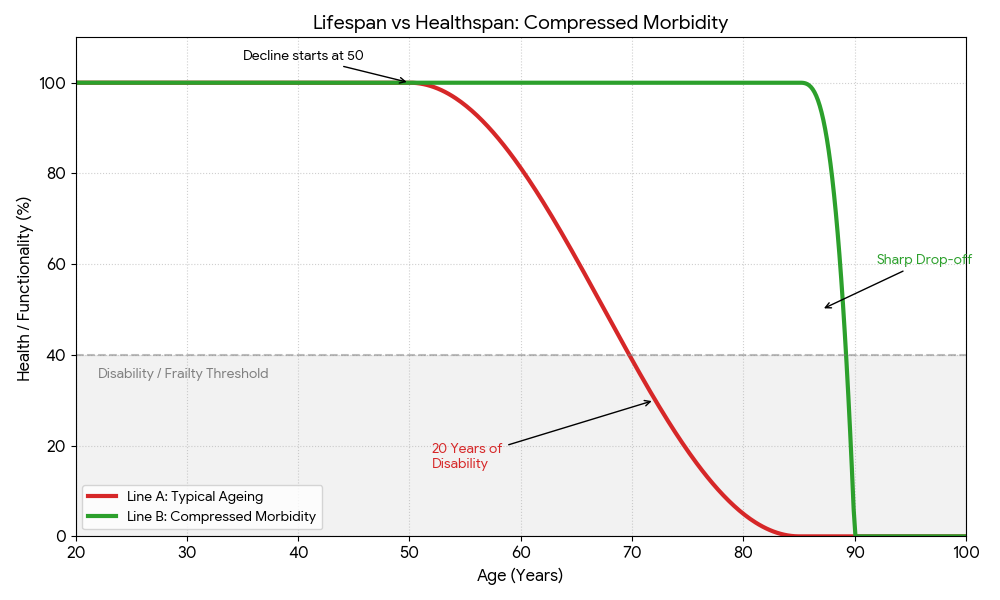
I’d be happy to settle for an active life, then a brief illness at the end, rather than twenty years of gradual decline.
That’s a far more realistic — and appealing — ambition than many years of medical interventions, drugs and infirmity.
The pillars of healthspan
The encouraging news? The biggest drivers of healthspan aren’t experimental drugs or cryogenic chambers. They’re simple things you can manage every day of the week:
Healthy Movement: Regular physical activity reduces disease risk across almost every category.
Healthy Muscles: Muscle mass and strength are strongly associated with lower mortality risk and maintained independence.
Healthy Eating: Mediterranean-style eating patterns consistently correlate with longer healthy lifespan.
Healthy Sleep and Stress Management: Poor sleep and chronic stress accelerate cardiovascular and cognitive ageing.
Healthy Social Connections: Strong social ties are linked to lower mortality risk. Isolation carries measurable health consequences.
It’s true they aren’t as sexy as some of the advice from the usual influencers, but there’s no need for potions, pills or cold plunges - and you can still eat toast if you want to.
The takeaway
Pete Townshend may have been onto something after all. Getting older is inevitable. But “getting old” — in the sense of prolonged frailty — isn’t entirely beyond our influence.
We may not be able to dramatically extend the outer limits of our lifespan. But we can influence how many of our years are lived well.
And that seems a far better goal than chasing immortality.
Until next time.👋
Medical Disclaimer: This article is for general information only and does not constitute medical advice. The needs of every reader are unique; please consult your GP or a qualified healthcare professional before making changes to your diet, exercise routine, or medication. Never ignore professional medical advice because of something you read online.