

Cardiac Diary Part 1: On the Comeback Trail… With a Deadly Detour
"Everyone has a plan until they get punched in the face." —Mike Tyson.

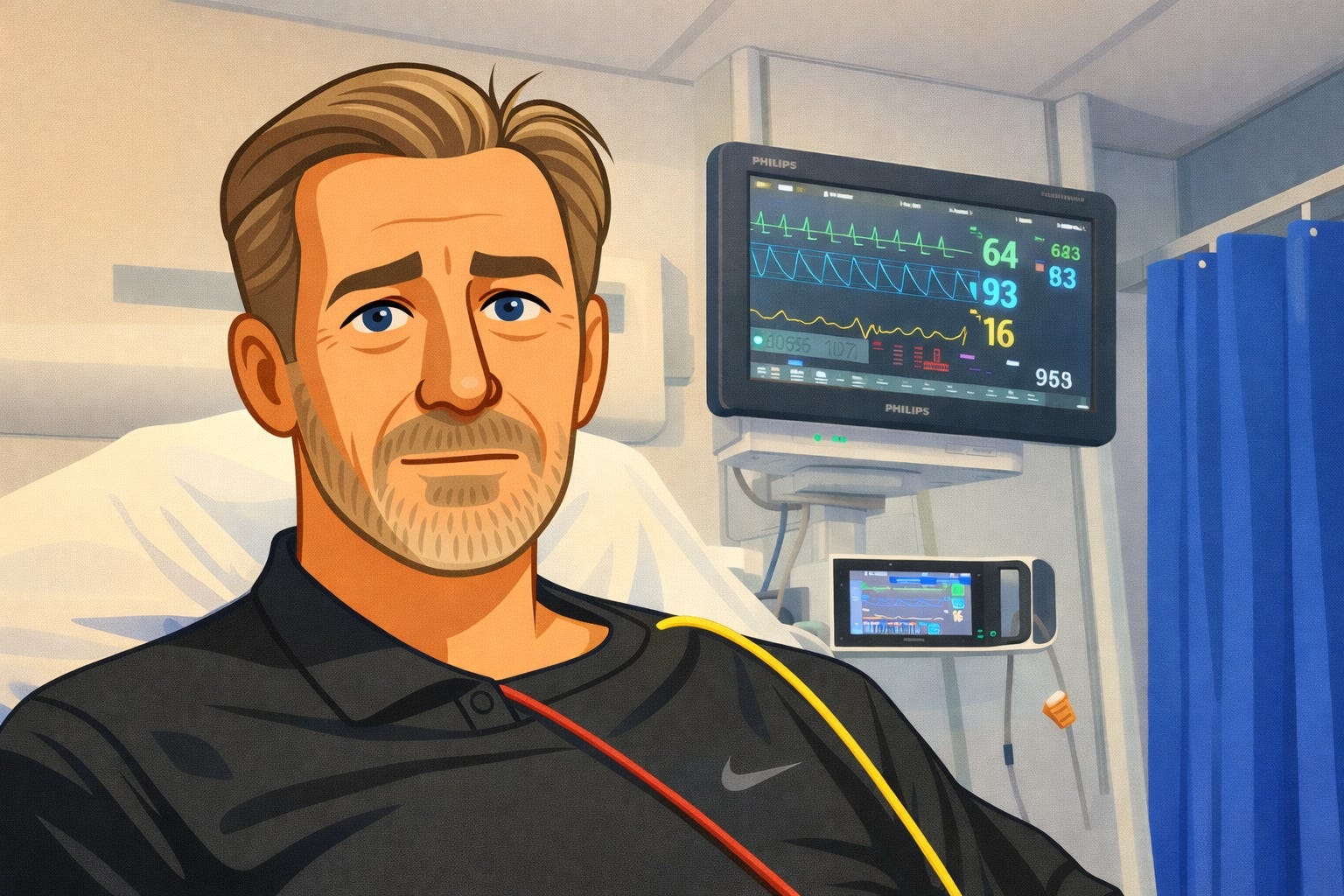
According to the British Heart Foundation, almost 460 people in the UK will lose their lives every day to heart attack, stroke, heart failure or other cardiovascular diseases - that’s one death every three minutes. To be perfectly honest, I didn’t think for a single second that I’d be auditioning for a leading part in that story. As far as I was concerned, Thursday the 6th October 2022 was going to be a typical day like any other - but fate had other ideas.
Less than two weeks before, I was living the dream on our annual sunshine holiday in Rhodes. My daily routine was a regular rotation of tennis and gym sessions, followed by a well-earned snooze on the sun lounger - bliss. My wife, meanwhile, was busy doing her ‘WOD’ and disappearing for long bike rides around the island. We were the picture of middle-aged health — or so I thought.
Hello, annus horribilis
Let’s be clear: 2022 had already been my Annus Horribilis for health. It kicked off with a double hernia operation in March, followed in July by an unexpected four-day stint in hospital for diverticulitis. Never heard of it? Neither had I.
I spent most of the year either ill or “recuperating” (which is code for eating a little too much and exercising too little). By the time Rhodes rolled around in September, I was overweight, out of shape, and desperate for a reset.
Time to hit the comeback trail.
Except… the trail was feeling remarkably steep.
When the gym stops liking you back
With regard to exercise, I’m fairly clued up when it comes to my heart rate, speeds, and inclines — I know what usually works for me. But in that Greek gym, the treadmill and I weren’t getting along at all. Instead of running, I was walking. Instead of inclines, I was sticking to the flats.
I wasn’t in pain; I just felt like I was running on empty.
I put it down to more than 12 months of enforced inactivity, but the “comeback” was starting to look less like a hill and more like a mountain.
Still, my hernia felt fine and my tennis game was holding up. I figured I’d just push through. Back home, I even booked a coach to get me ready for competitive club play.
All systems go, or so I thought.
The event that felt like a non-event
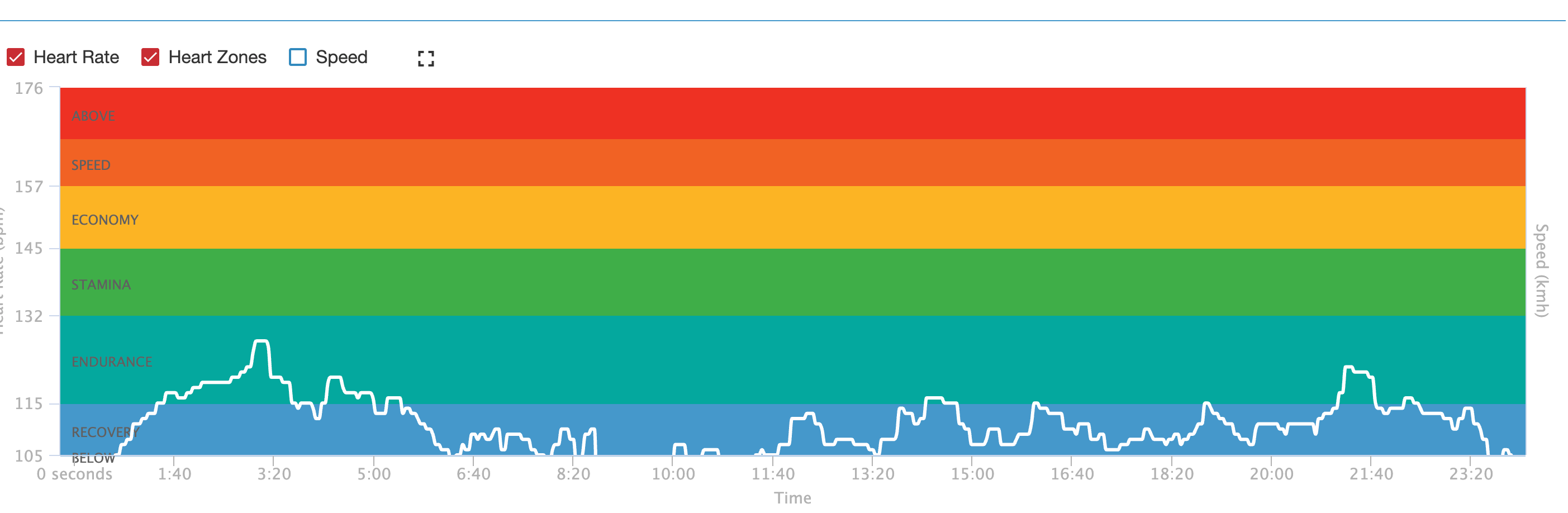
After returning from holiday, I tried to make up for lost time with a 5-day exercise streak. On day four, I got on the bike at home and felt, quite frankly, knackered. For the first time ever, I had to stop early. Usually, my heart rate would be around 130 bpm, but on this occasion I was getting exhausted at 115 and eventually had to stop completely. No chest pains, no dramatic “lightbulb” moment of agony — just overwhelming, bone-deep exhaustion.
The next day — Thursday — I woke up feeling exhausted and put it down to a touch of overtraining. I spent most of the day taking it easy but couldn’t shake off the feeling of tiredness. Around 8 pm, my wife asked me to move the car while she hopped in the shower. As I stepped outside into the driveway, it hit:
A wave of nausea.
A sudden, cold, clammy sweat.
And a general sense of: This isn’t good.
There were no Hollywood-style scenes of me clutching my chest and collapsing into the hydrangeas. It was almost banal. I walked down the road for some fresh air, felt a slight tightness in my chest, and realised — with a strange, calm certainty:
I’m having a heart attack.
And I’m standing in the street where no one can find me.
The sliding doors moment
I gingerly made it back inside and called up to my wife:
“Please call an ambulance. I think I’ve had a heart attack.”
Because I was conscious and breathing, I was triaged as a non-emergency case. In fact, after sitting around for a bit and the obligatory soluble aspirin, I did that classic man thing and suggested we cancel the ambulance because I felt “much better”.
Thankfully, my wife has more sense than I do.
When the paramedics arrived at 11 pm, the sliding doors moment happened. Life as a person ended; life as a patient began. Strapped to an ECG, wheeled onto a gurney, and masked up (thanks to the tail end of COVID-19), I was whisked away to A&E.
Mystery solved — with zero bedside manner
By midnight, I was in a cubicle, bored, restless and alone. I even took a selfie to use as an “amusing anecdote” later. I was convinced I’d be home by breakfast.
Eventually, a doctor strode past. He had the walk of a man with a very long to-do list that definitely didn’t include me.
Me: “Excuse me, Doctor? When can I get out of here?”
Doctor (glancing at my charts with all the warmth of a broken radiator):
“You won’t be going anywhere. You’ve had a heart attack.”
And with that, he put the chart back, turned and went back to his day.
No fanfare. No drama. Just the start of a very different journey for me…
Until next time 👋
This is Part 1 of my Cardiac Diary. In the next post, I’ll dive into what happens when you officially become “The Patient” — and the reality of life on a cardiac ward.
Have you ever had a gut feeling that something was wrong, even when it didn’t feel like a “typical” emergency? Let me know in the comments.
In the meantime, try the NHS Heart Age Calculator. This will compare your real age to your heart age by asking you questions about your health. You'll also find out how to improve your heart age by making some healthy lifestyle changes. Your heart age will give you an estimate of how healthy your heart is. Give it a go.
Medical Disclaimer: This article is for general information only and does not constitute medical advice. The needs of every reader are unique; please consult your GP or a qualified healthcare professional before making changes to your diet, exercise routine, or medication. Never ignore professional medical advice because of something you read online.