

Cardiac Diary Part 9: To Boldly Go – Life After Bypass Surgery
A heart attack and quadruple bypass took me somewhere I never expected to go. Nearly four years later, this is what recovery really looks like—and what I’ve learned from finding my way back.

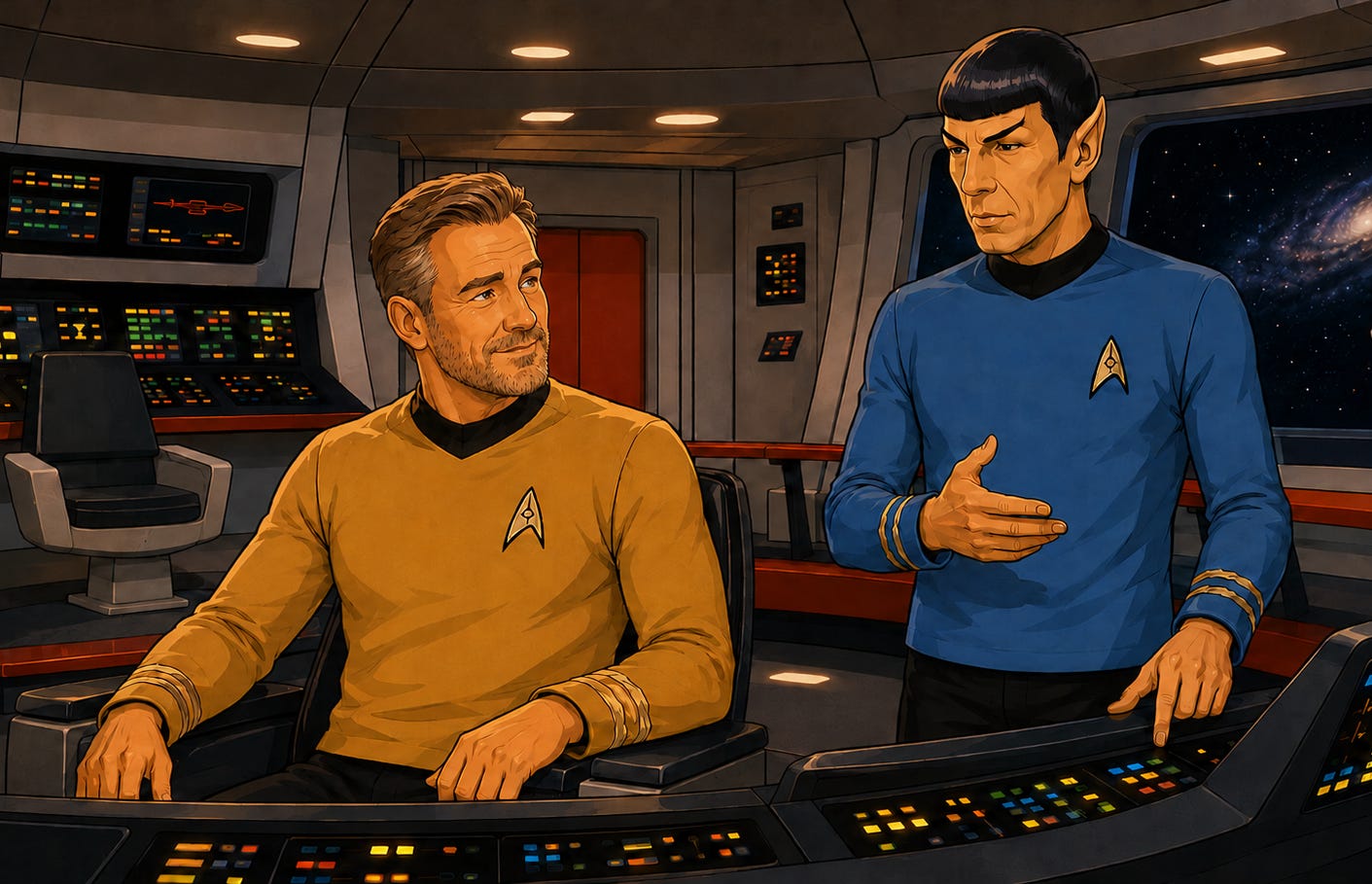
If you’re of a certain age, you probably remember watching the long-running television series Star Trek. Each episode featured a bizarre menagerie of aliens as the crew of the USS Enterprise travelled through space, following the instruction: ‘To boldly go where no one has gone before.’
I haven’t had the pleasure of travelling with Captain Kirk or First Officer Spock, but over the past few years I’ve certainly visited places I never expected to go.
Following my brush with mortality, courtesy of a heart attack and quadruple bypass surgery, I’ve documented much of what happened: the hospital stay, the indignities, the uncertainty and the often painful business of putting myself back together. Now, though, I feel I’ve reached the point where this part of the blog should come to an end.
This isn’t the kind of ending where I skip through a field of flowers while inspirational music plays in the background. Some things have changed permanently, and recovery hasn’t returned me to the person I was before. Nevertheless, I want to reassure anyone facing something awful that life can get better, even when you can’t begin to imagine how.
I suppose my recovery is now as complete as it is ever likely to be. Some problems will always require outside assistance. My liver, for example, continues to produce more cholesterol than is good for me. I rely on the wonders of modern medicine to keep that under control, alongside the less glamorous work of exercising, eating sensibly and trying to sleep properly.
Before I close this chapter, there are a few odds and ends still worth mentioning.
Pain
About six months after my operation, my recovery seemed to be progressing well. I was exercising, playing sport and beginning to experience that reassuring feeling of “getting back to normal”.
Then the pains started.
At first, it was a sharp pain in my chest when I twisted or bent down. Then it began happening more frequently. Naturally, I went straight to Google, where I quickly found horror stories about failed vein grafts, second bypass operations and an inexorable slide into infirmity.
I slammed the laptop shut and went to see a doctor before my imagination could finish its warm-up.
After a flurry of examinations and X-rays, I was told that there was nothing obviously wrong. Reassuring in theory, but less so when your chest starts grumbling halfway through a conversation. The pain continued for another two or three months, making it a particularly worrying period of my recovery.
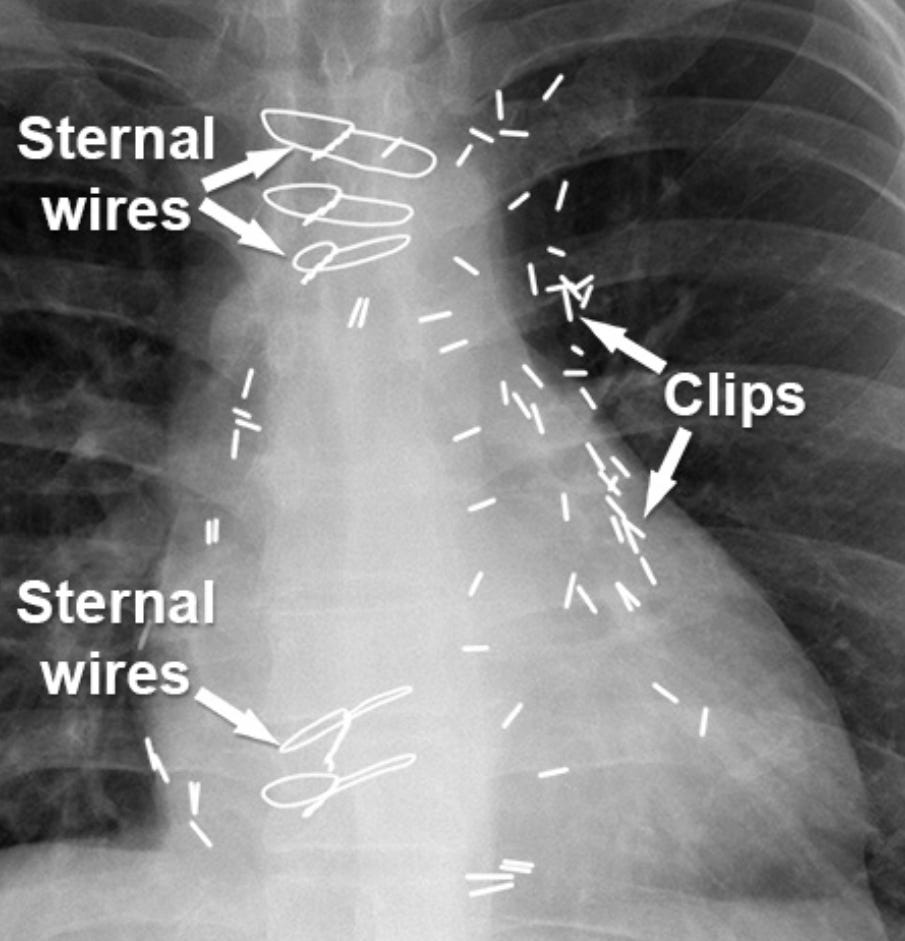
Later, I described the experience to a friend who also happens, very conveniently, to be a cardiologist. He thought the pain was most likely related to nerves healing after surgery. During bypass surgery, the chest is opened and a great deal of tissue is cut through. As damaged nerves recover, they can produce sharp, intermittent and sometimes alarming sensations.
In other words, what I had interpreted as an impending cardiac catastrophe may simply have been part of the healing process. It was frustrating that none of the experts who examined me had offered that possibility at the time.
I’m pleased to report that those pains disappeared and have never returned. I still experience the occasional chest grumble if I lie on one side for too long, but I can now do heavy bench presses, pull-ups, dips and shoulder presses without any problems. I’m not sure my sternum particularly enjoys all of them, but it has stopped lodging formal complaints.
Scars
“How right that the body changed over time, becoming a gallery of scars, a canvas of experience, a testament to life and one’s capacity to endure it.”
— Janet Fitch, Paint It Black
If Janet Fitch is right, my torso and legs are now closer to a canvas by Otto Dix than one by John Singer Sargent.
I have scars from hernia surgery, smaller marks where the chest drains from my heart op were inserted and, of course, the two big ones. The first runs down the middle of my sternum. The second begins on the inside of my ankle and winds its way up my leg towards my thigh, marking the route from which a vein was harvested for my improved plumbing.
Forgetting what happened isn’t really an option.
Initially, I was very self-conscious about the scars. Eventually, I decided the best course of action was to style them out and adopt a new identity as ‘man with scars.’ This has worked reasonably well. I’ve even met fellow cardiac patients who spot the evidence, recognise a member of the club and give me a knowing nod. There are more of us around than you might think.
The only fly in the ointment has been the development of keloids along my chest scar. These produce raised, red and bumpy sections that look more troublesome than they actually are. I was advised that they wouldn’t disappear any time soon and, almost four years later, I can confirm that this prediction was accurate.
Treatments are available, but none appeals enough for me to pursue it. For now, I’ve accepted the keloid as part of the price of doing business. It may not be particularly attractive, but neither is being dead.
The good things
A surprising amount of good has come from an event that, at the time, felt entirely catastrophic.
I’ve realised that many of the things I used to worry about simply don’t matter very much. If anyone asked me now what does matter, I would say family, friends and experiences. Money is useful because it helps make some of those experiences possible, but material possessions no longer have anything like the importance they once did. In fact, I now spend more time getting rid of things than acquiring them.
My general health and fitness have also improved enormously. I’ve overhauled my diet, reduced my stress and made repeated attempts to develop better sleeping habits. There’s always something to improve.
The single biggest practical change has been building a gym at home. It gives me everything I need on my doorstep: maximum convenience and minimum excuses. I no longer need to drive anywhere, wait for equipment or pretend that searching for a matching pair of socks counts as preparation.
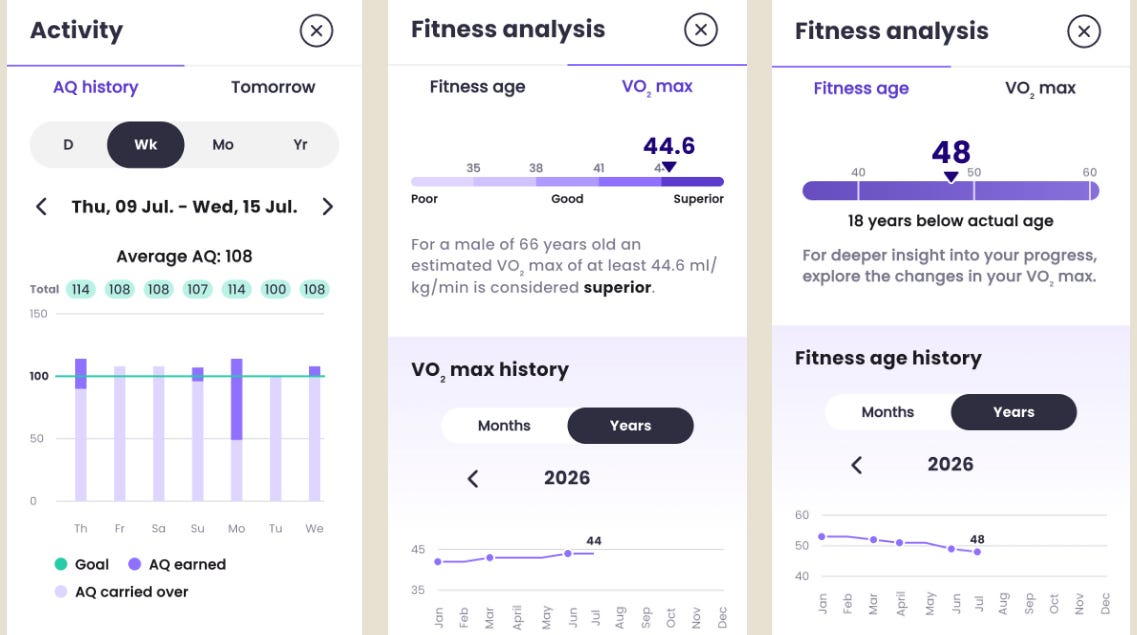
The additional plumbing supplying my heart has also felt a little like acquiring a new cheat code. My cardiovascular fitness has improved considerably, and I now include regular weekly training specifically intended to raise my VO₂ max. More importantly, it appears to be working.
I track my progress using an app from Mia Health, which is based on a large body of population research. It rewards not only general movement but also higher-intensity activity, which can provide a stronger stimulus for improving cardiovascular fitness.
Using this approach, I’ve managed to move my estimated VO₂ max into the highest range for my age. According to the app’s algorithm, my fitness age is now 18 years younger than my chronological age.
Officially, at least according to my phone, I’m now 48. I await the arrival of my new birth certificate.
Building bridges
Alongside my physical recovery, I’ve spent some time thinking about mortality and what I want to do with the second chance I’ve been fortunate enough to receive.
For much of my life, I was fiercely ambitious and highly focused on work-related achievements. Family and friendships were often the casualties. The worst consequence was that I lost touch with my sister and much of my immediate family.
Eight months after my bypass, and following a gap of 35 years, I travelled 200 miles back to my home town. I went to the house where I last remembered my sister living and knocked on the door.
Fortunately, she still lived there. More fortunately still, she welcomed me inside.
After the usual pleasantries, I explained what had happened to me. I told her about the heart attack, the bypass surgery and the long recovery. She listened, paused and then rolled up her sleeve.
On the inside of her arm was a long, snaking scar, strikingly similar to the one running up my leg. She’d also undergone a triple bypass several years earlier, using the vein in her arm for the bypass.
We had both come perilously close to never seeing each other again.
Reconnecting with my sister and the rest of my family has been one of the best things to emerge from this entire experience. It’s difficult not to wonder why it took a heart attack and major surgery to make me knock on that door, but I’m pleased with my decision.
Final thoughts
Like anyone growing older, I have the usual collection of aches, pains and mechanical peculiarities that accompany an ageing body. I’m determined to get as much use from it as possible before more parts begin to fail, as they inevitably will.
Recovery hasn’t meant returning to exactly who I was. It’s meant learning how to live well despite what happened, accepting the things I can’t change and doing something useful with the things I still can.
That has given me a renewed sense of purpose for the next chapter of my life. I want to help as many people as possible make more of their later years and demonstrate that ageing doesn’t have to mean an inevitable slide into a smaller world, diminished capability and dependence on others.
That is my ‘why’ from now on.
It turns out Star Trek was onto something. ‘To boldly go’ really can pay dividends — even if the strange new world you discover turns out to be a new version of your own life.
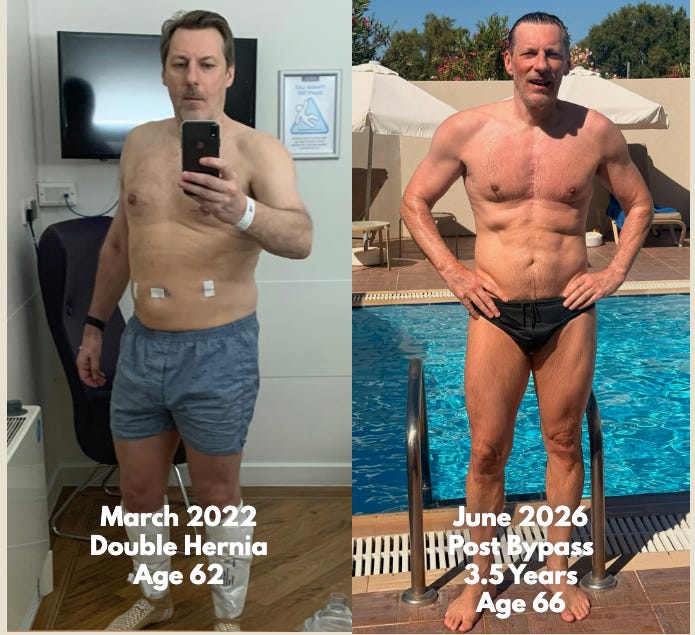
This is Part 9, and the final part, of my Cardiac Diary. Hope you enjoyed reading it. From now on I’m going to be writing about the experiments that helped me drop my ‘Age’ by 18 years, and how you can do the same.
Medical Disclaimer: This article is for general information only and does not constitute medical advice. The needs of every reader are unique; please consult your GP or a qualified healthcare professional before making changes to your diet, exercise routine, or medication. Never ignore professional medical advice because of something you read online.