

Cardiac Diary Part 4: My Heart-Stopping Appointment
After a week of waiting and preparing, bypass day is finally here. This is what it really feels like to hand your body over to complete strangers and hope for the best.

There’s an oft-used scene in war films. Fresh recruits heading for the front—boisterous, bantering, thrilled by the idea of it all. Adventure awaits. Stories to tell.
Then they pass the men coming the other way.
Uniforms torn. Faces hollow. Walking wounded. All of them changed by what they’ve just been through.
I had my own small version of that ‘fresh recruit’ moment walking into my new ward for the night.
It was around ten. The other patients were asleep, but not peacefully. Machines hummed and beeped. Breathing was laboured. The occasional groan cut through the quiet. These weren’t men back from battle—but they’d clearly been through the wringer.
And it was my turn tomorrow.
Rituals
Once I got settled in, I went to reception and asked if there was anything I needed to do.
There was.
I was handed a razor and told to shave my chest and both legs.
A nurse pointed me towards the shower and explained, as though it was obvious, that this would make it easier to “find and harvest the veins.”
I tried to imagine the scars. Ugh.
Once I was done, with my post-holiday tan and hairless body, I felt less like a cardiac patient and more like a Love Island: NHS contestant.
Sleep that night was fitful. Breakfast the next day, a token effort. Then came the first meeting with my surgeon.
He was calm. Friendly. Reassuring in the way someone can be when they’ve done something wildly complicated many, many times.
“It’s a serious operation,” he said. A pause. “But relatively routine for us. Just plumbing, really.”
I nodded, as if this was entirely reasonable. Inside, less so. This felt less like fixing a leaky tap and more like putting back together an adult-sized Humpty Dumpty.
Start, stop
A couple of hours later, a porter arrived. I was plonked into a wheelchair and off we went to theatre.
We moved through a maze of corridors and eventually arrived in a cavernous basement with factory-like rows of operating theatres, each quietly getting on with the business of changing someone’s life.
I was deposited in the holding area and asked to lie down on my allotted theatre trolley. Gown present; dignity elsewhere.
I felt an acute kind of helpless. You’re not in control of anything. Not your body, not the timeline, not even your thoughts, which tend to wander into unpleasant places.
People came and went. Names were called. Curtains moved. Eventually, my surgeon reappeared.
And he had The Face.
The same one I’d seen when I was first told I needed a bypass.
“We have a small problem,” he said.
Of course we do.
“Your anaesthetist tested positive for Covid.”
A pause.
“We need to find another one.”
I can’t claim to be an expert in hospital logistics, but even I could guess anaesthetists aren’t sitting around like subs on a pitch-side bench.
There were apologies. Then some more. Then back in the wheelchair. Returned to the ward. Deflated.
Game on
More waiting.
Then, mid-afternoon, the surgeon reappeared. Different energy this time. Lighter. They’d found a replacement. The wheels were back on.
Another call for a porter. None to be found. A brief pause.
“I’ll take you down myself.”
The man who was about to spend the next six hours with his hands inside my chest was pushing my wheelchair through the corridors himself. Multi-tasking indeed.
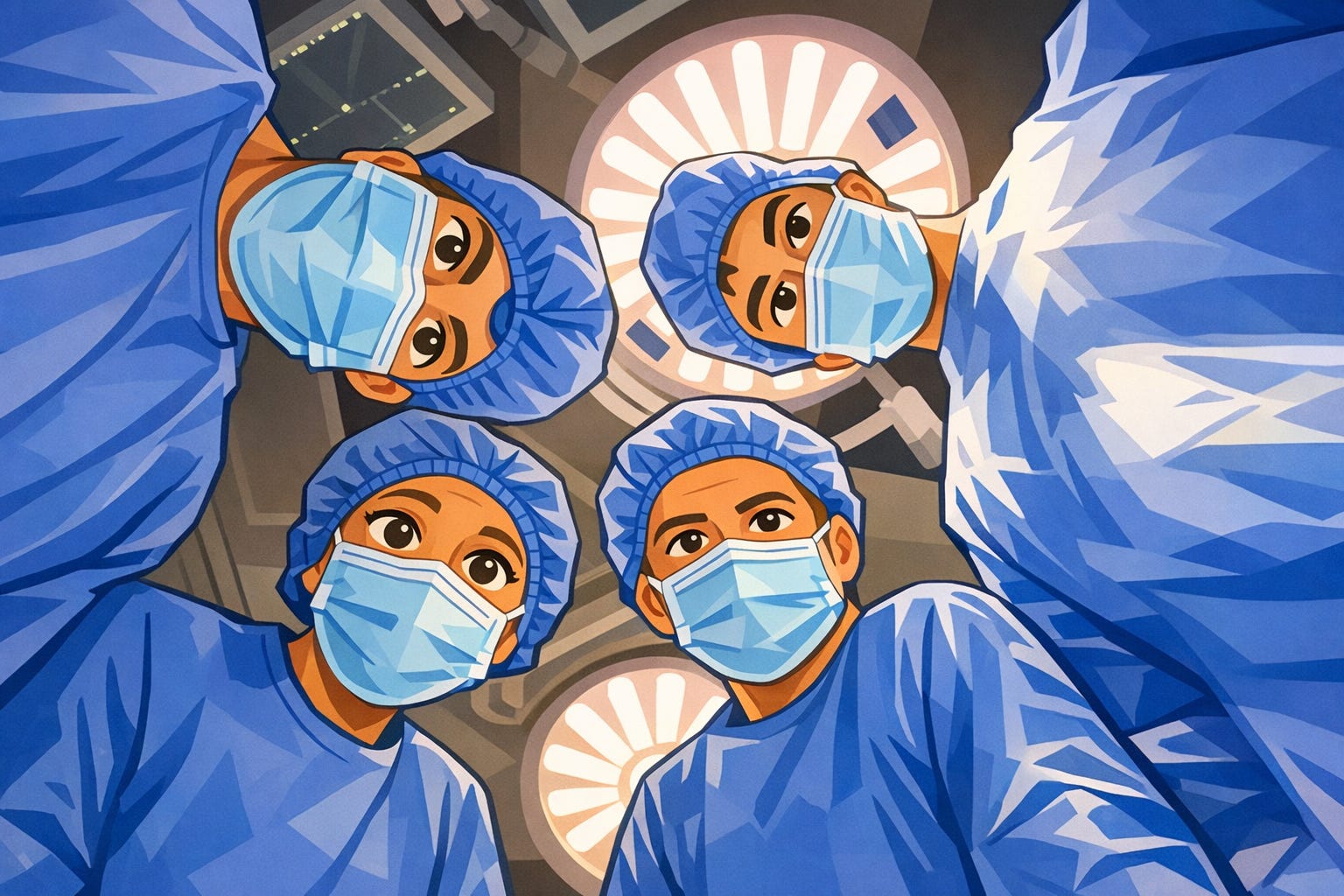
The second arrival felt different. More purposeful. Introductions came thick and fast. Faces, names, roles—most of which I immediately forgot in a blur of blue scrubs. A well-rehearsed choreography unfolding around me.
I was moved into a small anteroom just outside the theatre. I lifted my head and looked in. Machines. Lights. People moving with purpose. Hard not to feel the weight of it.
All of this—for me.
The final moments were simple, almost banal. A mask. A few words. A voice telling me to count backwards from ten.
Ten… nine… eight…
And then, out.
While you were sleeping
What happened next I only know because I later watched an NHS explainer video—mostly from behind the sofa. Let’s just say it was… graphic.
My operation was ‘on-pump’. In simple terms, my circulation and breathing was diverted to a heart–lung machine. Then, my heart was stopped. Yes—actually stopped.
The surgeons got to work. Bypass times four.
Sections of vein were ‘harvested’ from my left leg and grafted onto the heart. Each one creating a new route for blood to flow. A life-saving detour.
Once all four were in place, my heart was restarted. The machine stepped back. Normal circulation resumed.
Six hours later, the job was done.
The worst part, surely, was behind me.
Or so I thought.
This is Part 4 of my Cardiac Diary. In the next post, I’ll write about my time in the Intensive Care Unit up to being discharged. Let’s just say it was eventful. Until next time…
Medical Disclaimer: This article is for general information only and does not constitute medical advice. The needs of every reader are unique; please consult your GP or a qualified healthcare professional before making changes to your diet, exercise routine, or medication. Never ignore professional medical advice because of something you read online.