

Cardiac Diary Part 3: The Calm Before the Bypass
After the worst reveal ever, and a week of tests and waiting, doctors decided I was fit and healthy. Fit and healthy enough, that is, to stop my heart and fix the plumbing.

As a new, albeit reluctant, member of what I came to think of as “Club Cardiac,” my journey began to take a well-worn path for this sort of thing.
I would remain a guest of the hospital for the time being, undergoing a steady procession of tests and preparations before being transferred to a specialist cardiac unit in London for the operation. At this point, everything becomes both highly organised and strangely opaque.
Things are happening; you’re just not entirely sure what or when, or why.
The echo
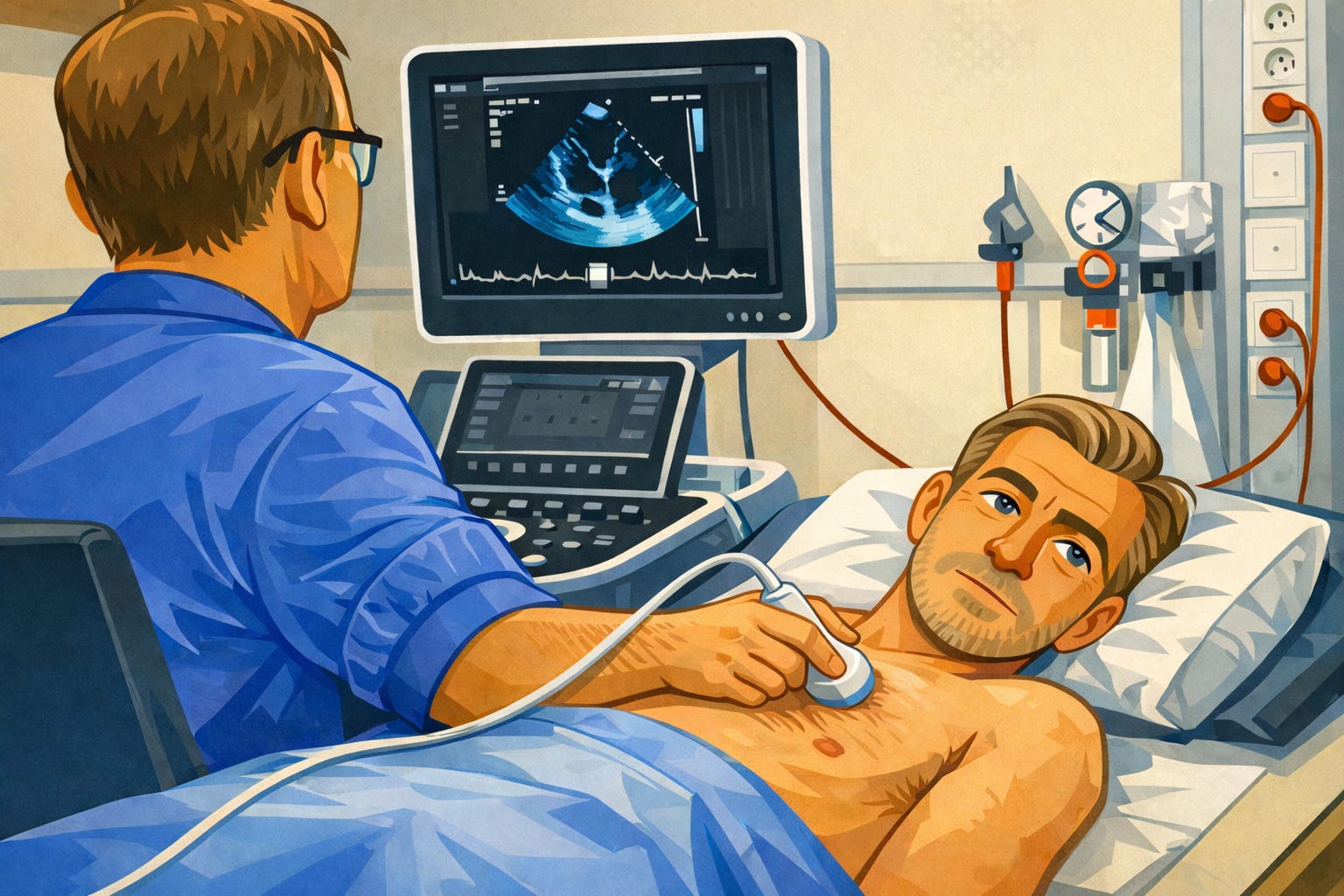
Not long after the angiogram and its accompanying bombshell, a technician arrived pushing a trolley loaded with yet more high-tech kit. It was time for an echocardiogram—or “echo” if you’re in the know.
The process itself was straightforward: a blob of cold gel, an ultrasound probe to the chest, and a screen showing a grainy, flickering image of something that, I was assured, was my heart. I could see it pumping away, which felt reassuring.
Apparently, if you know what you’re looking at, these images can reveal quite a lot. The main focus was something called the ejection fraction—the percentage of blood the heart pushes out with each beat. If part of the heart muscle has been damaged—say, by a heart attack—it can reduce that number. And that, I gathered, is not what you want.
Before I had time to fully process the implications, the technician announced that mine was “fine.” She made a note, wiped away the gel, and wheeled her magic machine off to the next unsuspecting patient. I took that as a win. Although, in my relieved state, I forgot to ask what the number actually was.
New digs
Behind the scenes, the NHS machine was quietly doing its thing. At some point, a bed became available on a male cardiac ward. I gathered up my belongings and my ever-present ECG monitor and was wheeled through a maze of corridors and lifts to a destination that looked almost identical to the last one. Hospital design does not encourage a strong sense of place.
The new ward had six beds. I managed to secure the one closest to the toilet and the exit, though at the expense of any proximity to a window—a trade-off I was willing to make. Once settled, my transition into a full-time patient began.
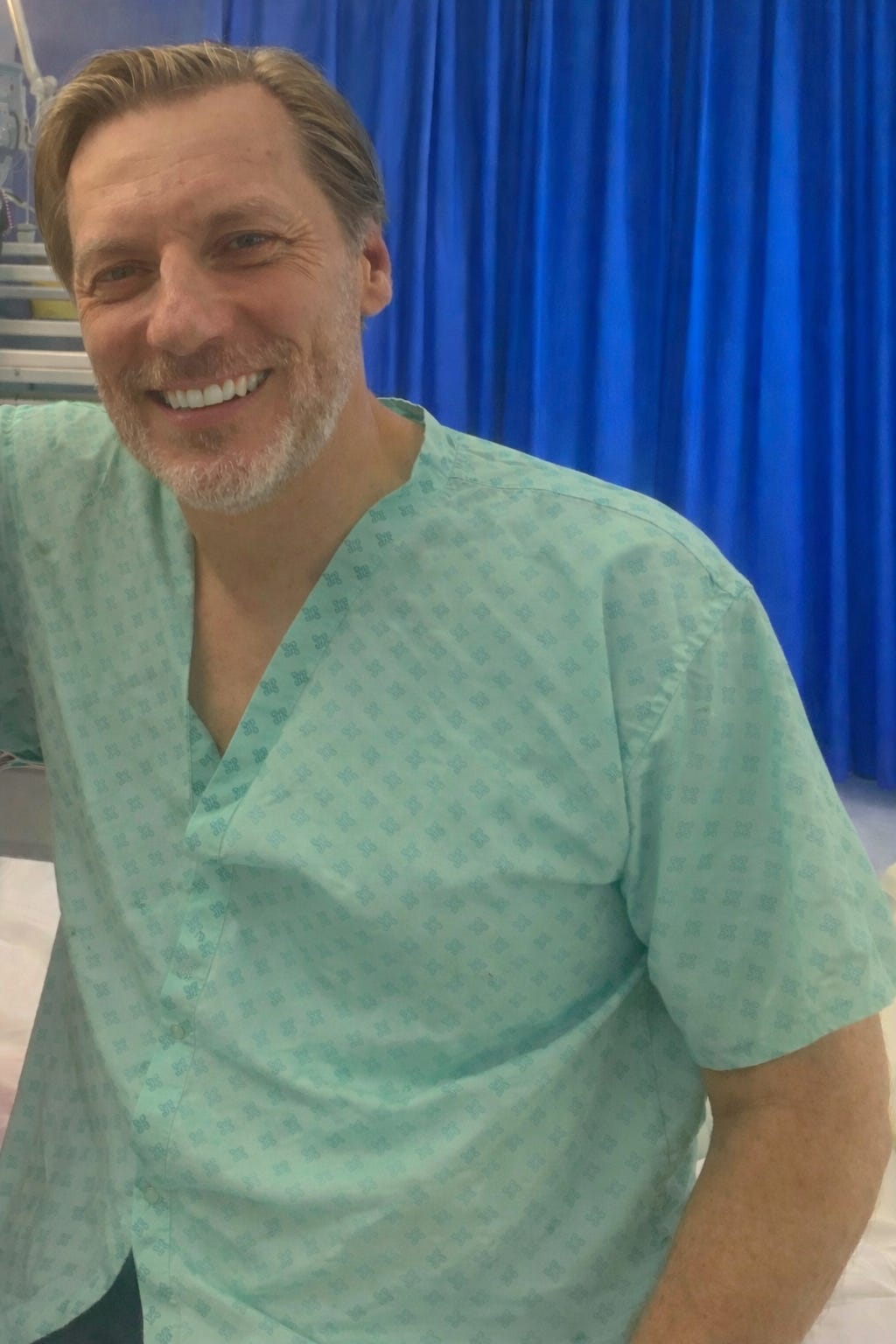
I was issued with a set of pyjamas that could only make fashion sense inside a hospital. More electrodes were attached, this time connected to a monitor with a convenient clip system so I could unplug myself when necessary, like a modern kitchen appliance.
And that was that. I was in.
A whole week of hurry up and wait
I didn’t know how long I would be there. Days have a way of blurring in a hospital, structured around a series of predictable events:
Meals
Doctor rounds
Medication
Waiting
Repeat
Time passes, but not in the usual way. The only real breaks in the rhythm were visits from family, the occasional conversation with a fellow patient, or the arrival of someone with a new piece of equipment and another test to run. I was X-rayed, injected, and asked to blow into various tubes.
The end result of all this activity was the slightly ironic conclusion that I was fit and healthy enough to undergo major heart surgery.
The negotiation
If there are stages to processing something like this, I suspect this was the negotiation phase. I started to wonder if there might be a way out. Could I just… not have the operation?
What if I discharged myself, went home, and carried on as if none of this had happened? Were there alternatives that didn’t involve opening my chest for several hours and then putting it back together again? These seemed, at the time, like reasonable questions.
Later that day, one of the doctors did me a favour. During the ward round, I asked him what would happen if I chose not to go ahead with the operation. He looked at me for a moment. Then, in a strong South African accent, said:
“Mr. Dyson… you wull daaaa.”
That cleared things up. Operation it was then.
Out of my hands
After a monotonous week, things began to move. There was a brief period of uncertainty followed by the unmistakable signs of imminent departure. I was told to pack my things; an ambulance had been arranged.
Destination: Hammersmith Hospital. At some point during the journey, they even put the blue lights on—a nice touch.
By the time I arrived, the shape of things was clear. Tomorrow, my life was going to change. How much it would change—and how well things would go—was now entirely in the hands of the surgical team.
For the first time since this all began, I was properly out of my own hands.
There was nothing more for me to do.
This is Part3 of my Cardiac Diary. In the next post, I’ll write about the ups and downs of the day of the operation. Mainly the downs if I’m honest. Until next time…
Medical Disclaimer: This article is for general information only and does not constitute medical advice. The needs of every reader are unique; please consult your GP or a qualified healthcare professional before making changes to your diet, exercise routine, or medication. Never ignore professional medical advice because of something you read online.