

Can You Out-Squat Your Kettle?
The "Asian squat" isn't Asian at all. It's a natural human movement that many of us lose over the years—and getting it back could make everyday life a whole lot easier.

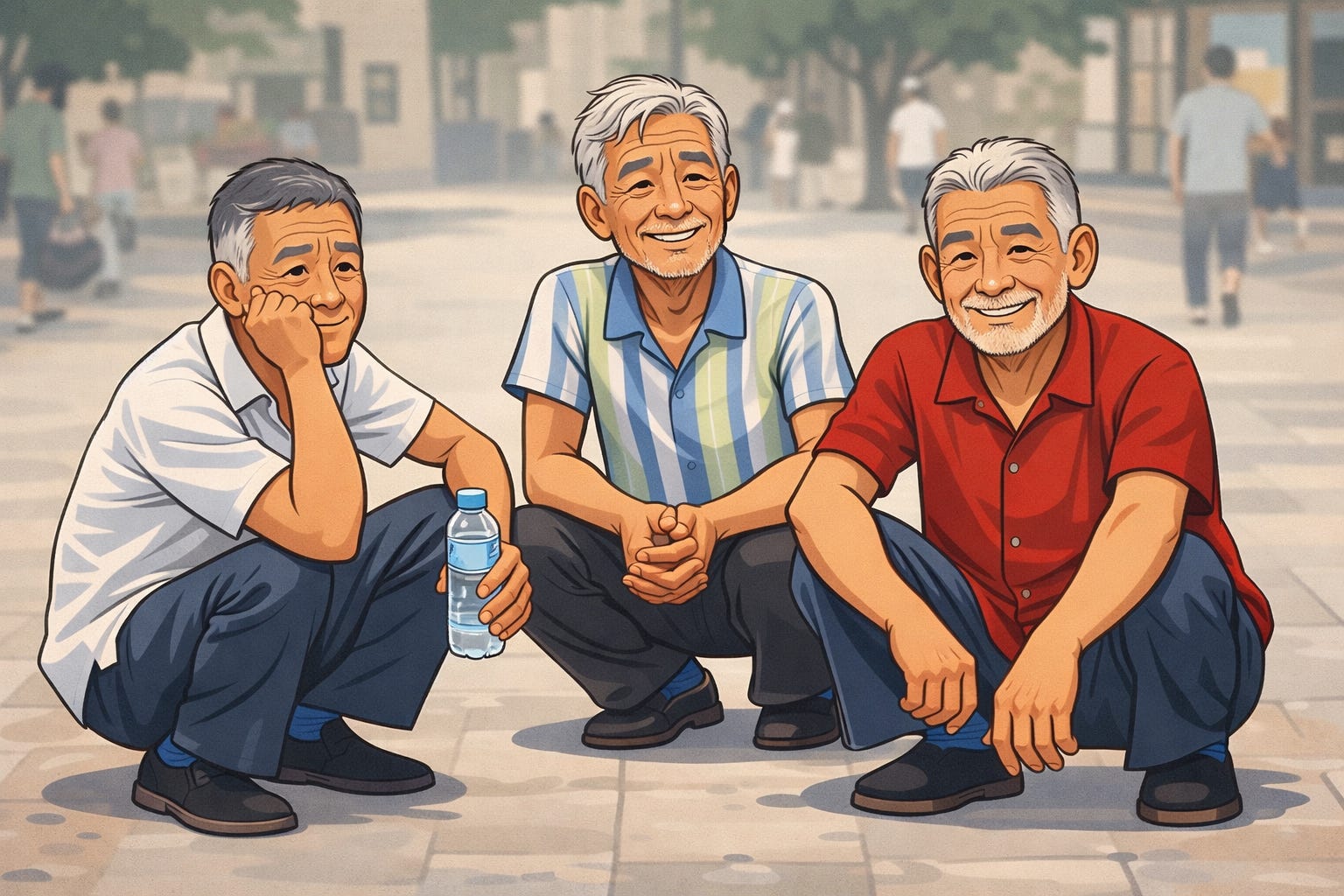
The first time I noticed was during a business trip to South Korea in the early 1990s.
The country was in the middle of an extraordinary transformation. Towering office blocks, gleaming hotels and the latest technology sat alongside reminders that, only one generation earlier, much of the population had lived a simpler, largely agricultural life.
Walking through Seoul’s main bus station, something completely unexpected caught my eye. Dozens of people of all ages were waiting for their buses, but once all the benches were taken, they naturally did something else. Instead of standing, they were chatting, smoking, reading newspapers and simply passing the time while resting comfortably in a deep squat.
Not the strained, wobbly squat you might see in a gym, but a full, heels-flat-on-the-floor squat that looked every bit as comfortable as sitting in your favourite armchair.
To a westerner it struck me as a little odd, almost alien. And don’t get me started on the toilets!
Years later, I realised I’d witnessed something many of us in the West have long since forgotten how to do.


Before you read any further, try this
Stand with your feet about shoulder-width apart and slowly lower yourself into a deep squat with your heels flat on the floor.
If you managed it comfortably, you’re in the minority. If you couldn’t, don’t worry—you’re in very good company.
Whether your heels lifted, you tipped backwards or you simply couldn’t get that low, the reason probably isn’t your age. It’s how you’ve been living for the past 40 years.
The interesting question isn’t whether you can still do it. It’s why so many of us lose this perfectly natural human movement.
Why it’s called the ‘Asian Squat’
Spend time in countries such as China, Japan, South Korea, Vietnam or India and you’ll still see people resting comfortably in deep squats while chatting, waiting for buses, cooking, gardening or working close to the ground. Because the movement remains part of everyday life, it never disappears.
Observational studies and everyday experience show a clear cultural difference. Deep resting squats remain far more common across many Asian countries than they do in Western Europe or North America.
The internet labelled it the ‘Asian squat.’ It’s a catchy name, but it’s also slightly misleading.
This isn’t really about ethnicity. It’s about environment.
Western weightlifters, gardeners, martial artists, tradespeople and anyone who regularly spends time close to the ground often retain an excellent squat regardless of where they were born.
The simplest explanation is also the most convincing. Use it or lose it.
Sitting changed our bodies
A comfortable deep squat asks quite a lot of your body. It needs mobile ankles, flexible hips, healthy knees and a confident balance system. Modern Western life consistently trains almost every one of those qualities in the opposite direction.
1. Your ankles stop bending
For most people, ankle mobility is the biggest obstacle.
A deep squat requires your knees to travel forwards while your heels stay firmly on the floor. Years of walking on flat pavements, wearing supportive shoes and rarely using the ankles through their full range gradually stiffen the joints and surrounding tissues.
When your ankles stop moving, your body improvises. Your heels lift, your chest collapses forwards or you simply fall backwards.
None of those feels remotely restful.
2. Your hips become chair-shaped
Most of us spend hours every day with our hips bent at roughly 90 degrees.
Our bodies become brilliantly efficient at exactly that position—and much less enthusiastic about anything outside it.
Deep hip flexion starts to feel tight, awkward or physically blocked.
3. Your brain complains
Movement isn’t just about muscles and joints. Your brain is constantly deciding which positions feel safe.
If you haven’t squatted deeply for years—or you’ve previously experienced knee, hip or back pain—your balance feedback system starts treating the movement as unfamiliar. You hesitate, wobble, reach for the kitchen counter or simply avoid going that low.
Over time, unfamiliar becomes uncomfortable.
Why it matters after 50
Losing the ability to deep squat is an inconvenience when you’re 25. After 50, it’s potentially life-limiting.
A comfortable squat tells you several important systems are still working well. Your ankles move freely. Your hips remain mobile. Your knees tolerate deep bending. Your balance is intact.
Lose those abilities, and everyday life quietly becomes harder.
Stairs feel steeper.
Getting into low cars becomes awkward.
Picking something up from the floor requires planning.
Playing with grandchildren often ends with, ‘You come up here instead.’
The squat isn’t important because everyone needs to rest in one. It’s important because it reflects how comfortably you can negotiate everyday life.
Improvement starts here
The good news is you don’t need an elaborate mobility programme.
You just need to remind your body that this position still exists–and practice, practice.


Hold onto a kitchen counter, table or sturdy chair and lower yourself into a comfortable squat while keeping your heels on the floor.
If your heels come off the floor, place a few books underneath and slowly, over time, reduce the books until your heels can touch the floor.
Stay there for 20 to 30 seconds, breathe normally, then stand back up.
Repeat once or twice each day.
As the movement becomes more familiar, your ankles begin to soften, your hips loosen and your nervous system gradually stops treating the position as a red flag.
The final stage is to stay in a squat position without holding onto anything and with heels flat on the floor, bum as low as possible.
Then start weaving it into everyday life.
Squat while waiting for the kettle to boil. Or drop into a squat while unpacking the shopping. Holding the squat for at least 90 seconds should be your aim.
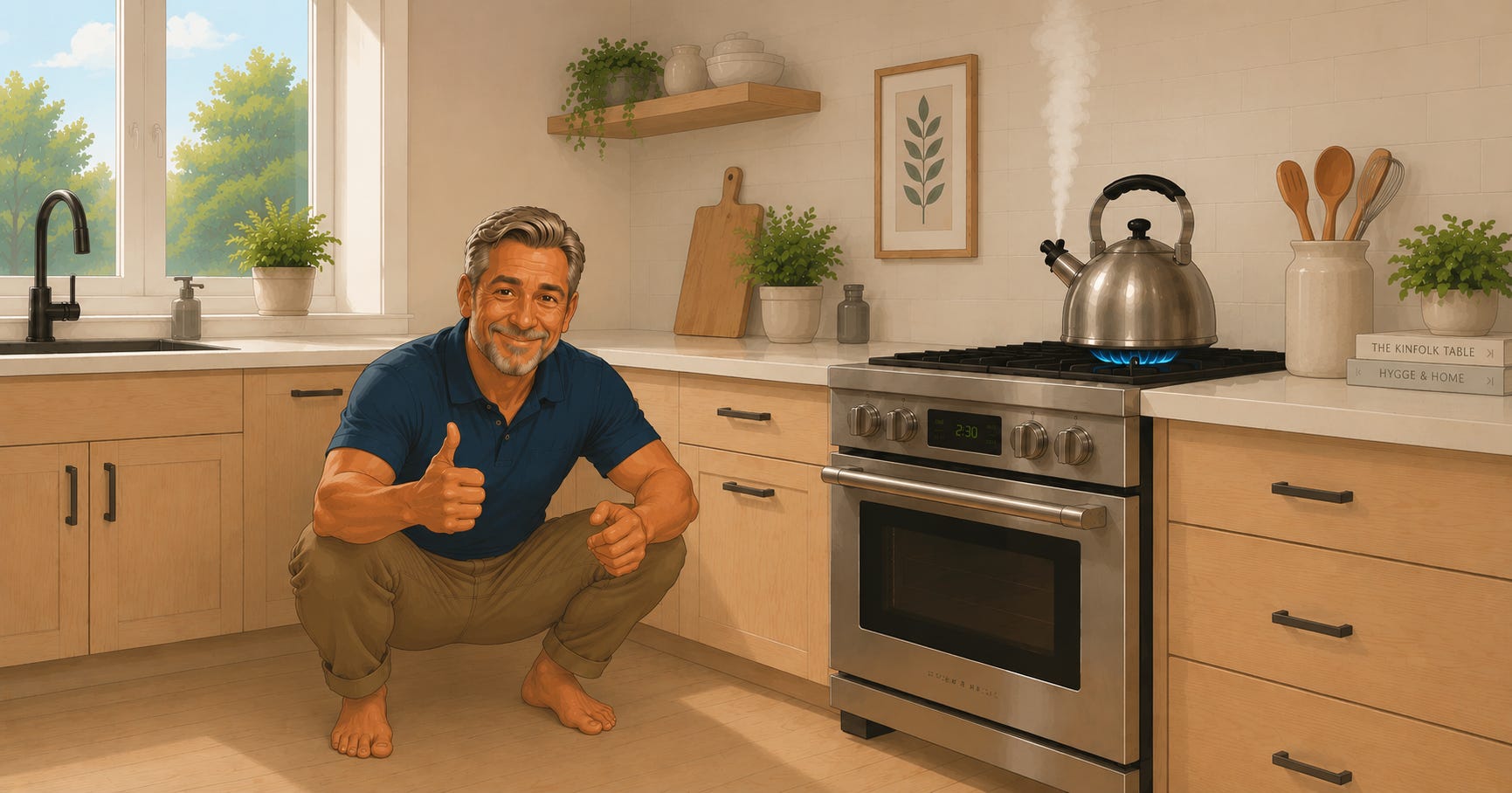
The goal isn’t to exercise more. It’s simply to spend a little more time in a position your body was designed to use.
The takeaway
The “Asian squat” isn’t really Asian at all.
It’s simply a human movement that some cultures never stopped practising.
We didn’t lose it because birthdays caught up with us.
We lost it because our environment designed away the need to do it.
The encouraging part is that the body is remarkably adaptable. Put it to work and it improves over time.
You don’t need to become a mobility fanatic. Think of this as ‘prehab’ to open up new possibilities for exercise and activities in your healthspan journey.
Your future self will thank you for it.
Until next time. 👋
Medical Disclaimer: This article is for general information only and does not constitute medical advice. The needs of every reader are unique; please consult your GP or a qualified healthcare professional before making changes to your diet, exercise routine, or medication. Never ignore professional medical advice because of something you read online.