

I Tried The Back Scratch Test: A Simple Check for Shoulder Flexibility
If taking off a sweater is starting to feel like a 10 minute wrestle with a woolly octopus, then it might be time to take a look at your shoulder flexibility.


There’s a moment when you reach behind your back—pulling off a sweater, fastening a bra, scratching an itch—and realise things are different now.
Everything seems a bit more laboured. A hint of stiffness where there used to be none.
That’s when it’s time for the back scratch test to make an appearance.
It’s quick, simple, and surprisingly revealing.
What this test measures
The back scratch test measures shoulder flexibility and mobility, particularly:
Internal rotation (bottom arm)
External rotation (top arm)
Overall shoulder joint range of motion
Imbalances in either shoulder
In simple terms: how well your shoulders allow your arms to move where they need to go.
It’s a combined movement. A bit of strength. Plenty of flexibility. And a whole heap of coordination between joints, muscles, and connective tissue.
Why it matters
Shoulder mobility tends to fade with age.
You don’t notice it in the gym. You notice it in daily life.
Reaching for a seatbelt
Putting on a coat
Washing your back
Getting something from a high shelf
Loss of shoulder flexibility is linked to:
Reduced independence
Higher injury risk
Compensatory movements (which often lead to neck or back pain)
And importantly, it’s one of the earlier things to decline if you stop using it.
How to do the test
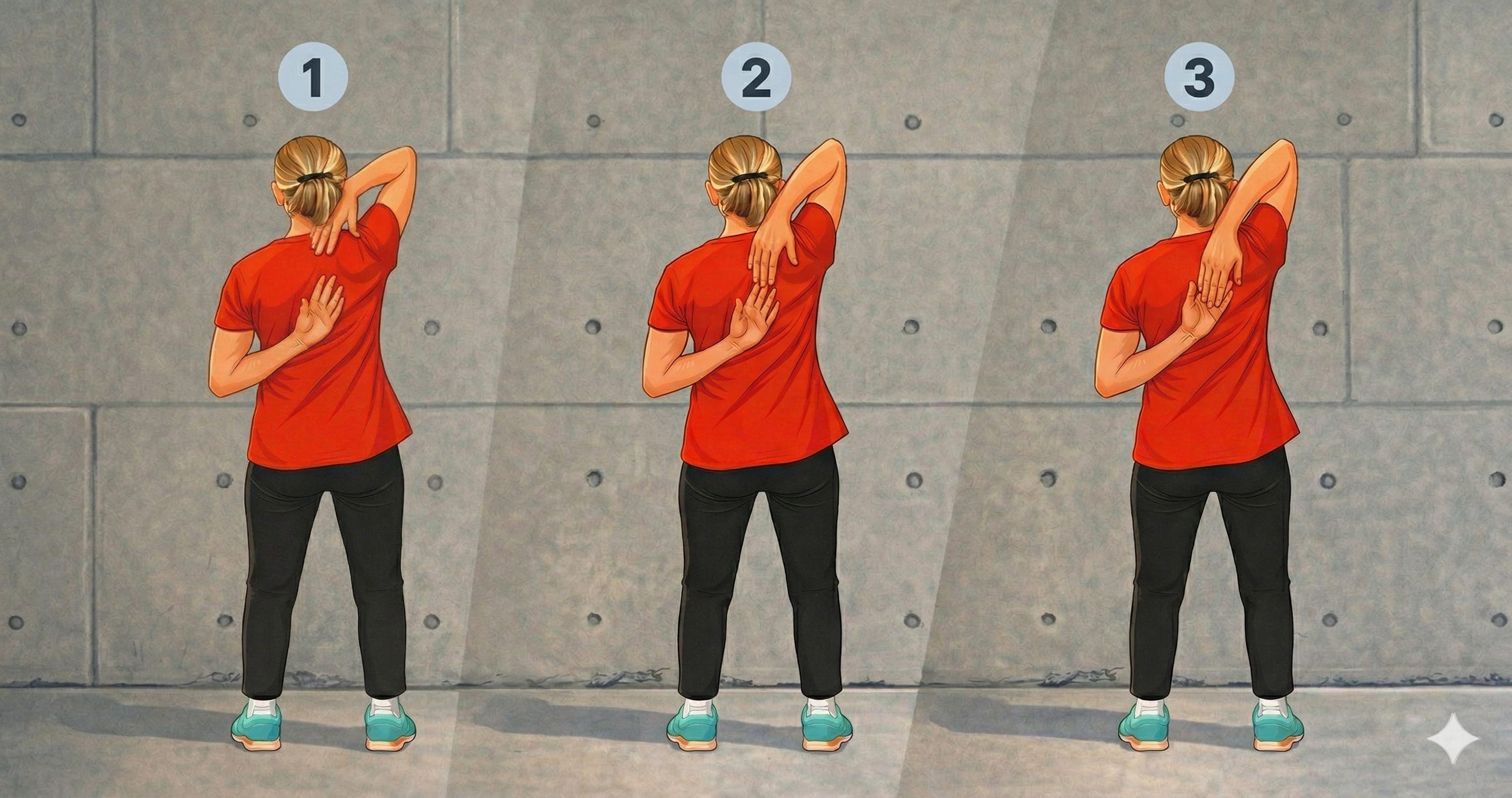
You just need a bit of space, wear loose clothing, and you’re all set.
Stand up straight
Reach one hand over your shoulder and down your back
Reach the other hand up the middle of your back from below
Try to touch or overlap your middle fingers
Make a note of how far you can, or can’t, overlap your hands
Remember to test both sides. Most people will have a “better” side.
Making sense of your score
This isn’t about perfection. It’s about context.
Can’t touch fingers - Needs work, time to get busy.
Just touching - Average. Good going but with a bit of effort you can improve.
Overlapping - Excellent. Give yourself a pat on the back—you can probably reach! 😆
Men tend to score lower than women on average. That’s normal.
What matters more is:
Your change over time
The difference between sides
Whether it affects daily tasks
A large side-to-side imbalance is often more important than the absolute number.
How to ace your next test
The good news is you can reverse the trend and ‘future-proof’ your shoulders. You don’t need a complicated routine. Just a few minutes of consistency.
Try this towel stretch routine.
Grab a towel and make sure your top is loose and comfortable.
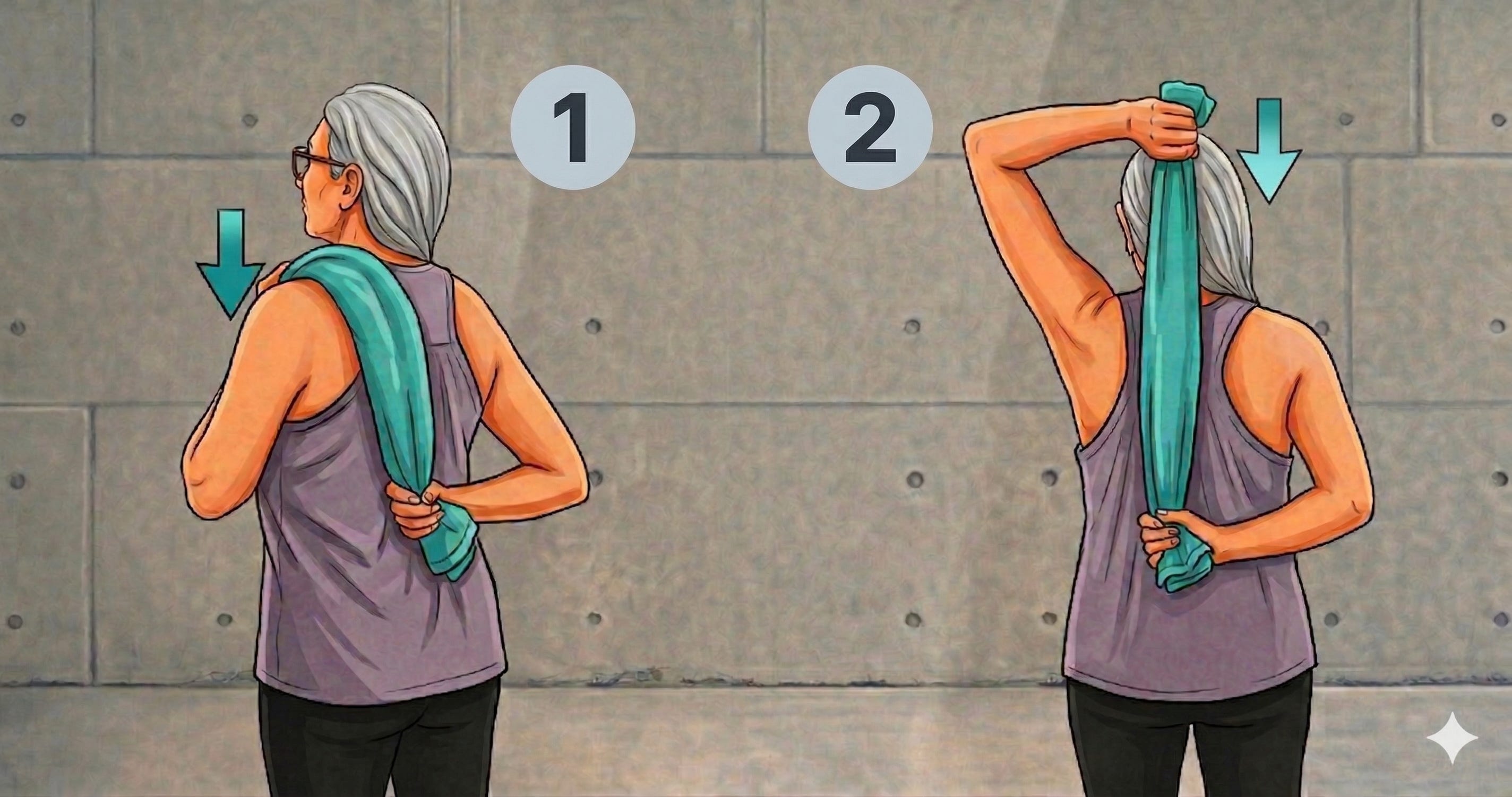
Stretch 1
Keep your right hand low and reach around as though you’re about to scratch your back, palm facing away from you.
Place the towel over your left shoulder and grab it with your left hand.
Slowly and gently pull the towel with your right hand until you feel a stretch in your left shoulder. It shouldn’t hurt.
Hold it for 10-15 seconds and repeat 3 times.
Now swap arms and repeat the process.
Stretch 2
Hold a towel above your head with your left hand.
Bring your right hand underneath and behind you and grab the towel with your palm facing away from you.
Slowly and gently pull the towel downwards with your right hand until you feel a stretch in your left shoulder. It shouldn’t hurt.
Hold it for 10-15 seconds and repeat 3 times.
Now swap arms and repeat the process.
Try it gain in a month to see if there’s any change.
A simple rule—If you can’t reach it, train it.
The takeaway
The back scratch test isn’t glamorous.
But it tells you something useful, quickly.
And like most good health checks, it gives you a choice:
Ignore it…
or do something small now, that makes life easier later.
Now, have a go and let me know how you get on in the comments. I’m off for a rematch with that woolly octopus…
Until next time. 👋
Medical Disclaimer: This article is for general information only and does not constitute medical advice. The needs of every reader are unique; please consult your GP or a qualified healthcare professional before making changes to your diet, exercise routine, or medication. Never ignore professional medical advice because of something you read online.