

Goals Are Overrated and Motivation Fades—Try This Instead
Atomic Habits: Tiny Changes, Remarkable Results by James Clear

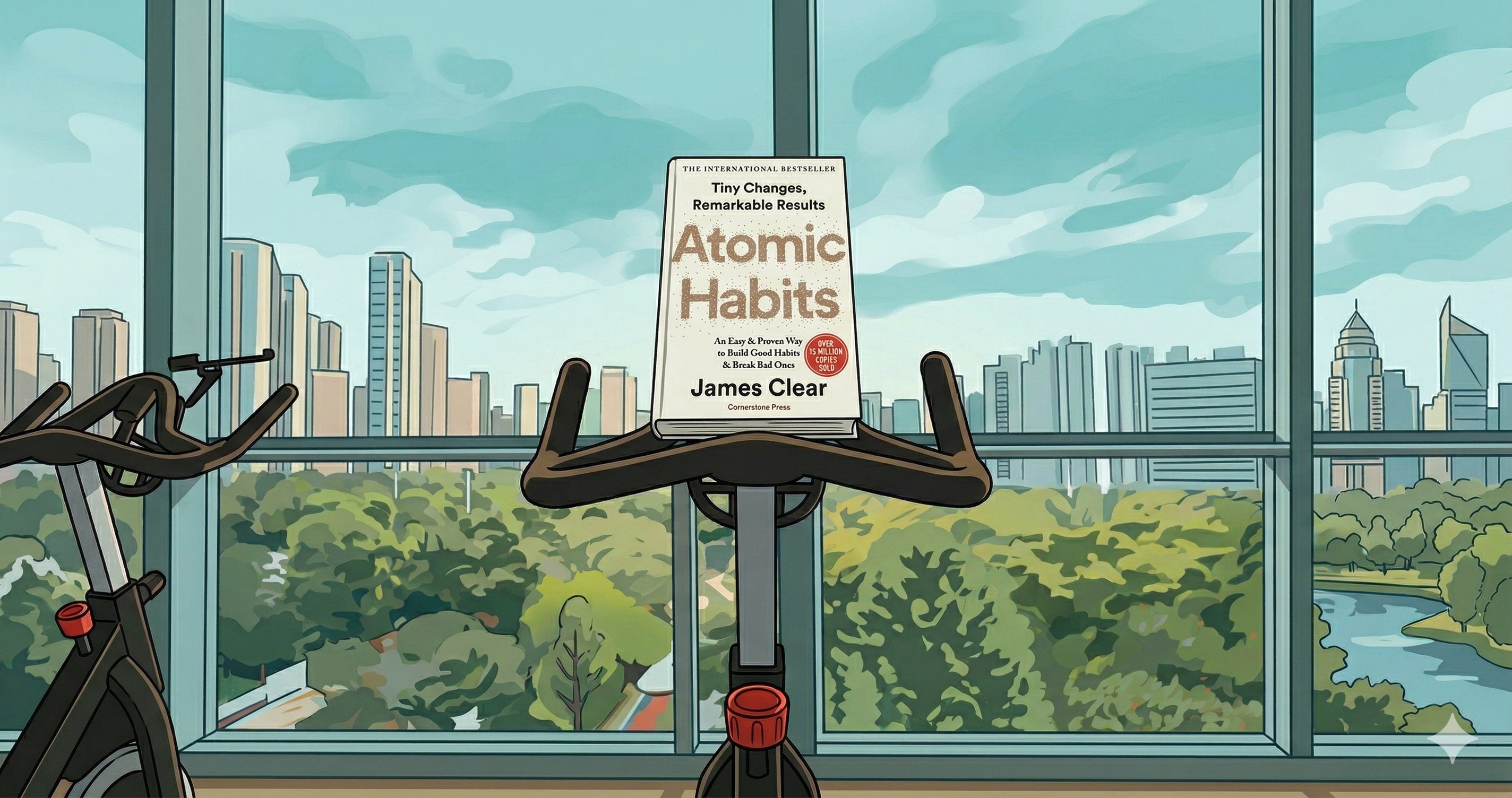
The book in a nutshell
According to Clear, you don’t change your life in one dramatic moment. You move there gradually through what you do every day.
This book makes a simple argument: small habits, repeated often enough, compound into something significant. Not quickly. Not obviously. But inevitably.
If things aren’t working, it’s rarely a motivation problem. It’s a systems problem. And systems, unlike motivation, can be designed.
The big idea
Forget goals. Build systems.
Clear’s central line—one worth pinning somewhere visible—is this:
You do not rise to the level of your goals. You fall to the level of your systems.
Goals give direction. Systems create progress.
Most people focus on outcomes (lose weight, get fit, write a book). The shift is to focus on the process—the daily behaviours that make those outcomes inevitable.
And underneath that sits something deeper still: identity.
Not “I want to get fit” but “I’m the sort of person who exercises regularly.”
Key insights
Small changes compound—quietly, then suddenly
Improving by 1% doesn’t feel like much. But over time it adds up. Clear uses the idea that tiny gains, repeated daily, can lead to dramatic results—like interest in a bank account, just slower to notice.Most people quit in what he calls the valley of disappointment—that awkward stretch where effort hasn’t yet translated into visible results.
Habits are the compound interest of behaviour
Your outcomes are a lagging measure of your habits.Your weight reflects your eating habits
Your fitness reflects your exercise habits
Your knowledge reflects your reading habits
You don’t get what you want. You get what you repeat.
Systems beat goals (every time, long term)
Goals create a short burst of effort. Systems create continuity.There are problems with goals:
Everyone has them (so they don’t differentiate success)
They create a “finish line” (and then people stop)
They delay satisfaction (“I’ll be happy when…”)
Systems remove all of that. You just keep going.
Identity drives behaviour
The most durable habits come from identity, not effort.“I’m trying to stop smoking” is fragile
“I’m not a smoker” is stable
Behaviour sticks when it aligns with who you believe you are.
Environment matters more than motivation
You don’t rise to your intentions. You fall to your environment.Make good habits obvious and easy. Make bad ones invisible and inconvenient.
Put the fruit on the counter and the biscuits to the back of the cupboard.
People with strong habits aren’t more disciplined. They’ve simply designed better surroundings.
The Four Laws of Behaviour Change
Clear structures habit formation into four practical rules:Make it obvious (Cue)
Make it attractive (Craving)
Make it easy (Response)
Make it satisfying (Reward)
Invert these to disrupt and break bad habits.
What to do with this information
Start smaller than you think is reasonable.
Not a new routine. Not a full reset. Just something you can’t fail to achieve.
One press-up
One downward dog
One walk to the end of the road
Then ‘stack’ it with something you already do (making coffee, brushing teeth).
Focus on consistency, not intensity.
And quietly adjust your environment:
Put the fruit where you’ll see it
Leave your trainers out
Remove friction from the behaviour you want
You’re not trying to change your life. You’re trying to cast votes for the type of person you want to become.
The one takeaway
Your future isn’t decided by “hero efforts.”
It’s decided by what you do every day—especially when it doesn’t feel like it’s working yet.
This book is for:
People who’ve tried to change and keep slipping back
People who rely on motivation (and find it unreliable)
People who like practical frameworks over theory
Anyone building something long-term—health, business, writing, anything that compounds over time
It’s particularly useful if you value long-term consistency over short-term ‘hacks’.
My rating
★★★★★
Medical Disclaimer: This article is for general information only and does not constitute medical advice. The needs of every reader are unique; please consult your GP or a qualified healthcare professional before making changes to your diet, exercise routine, or medication. Never ignore professional medical advice because of something you read online.